
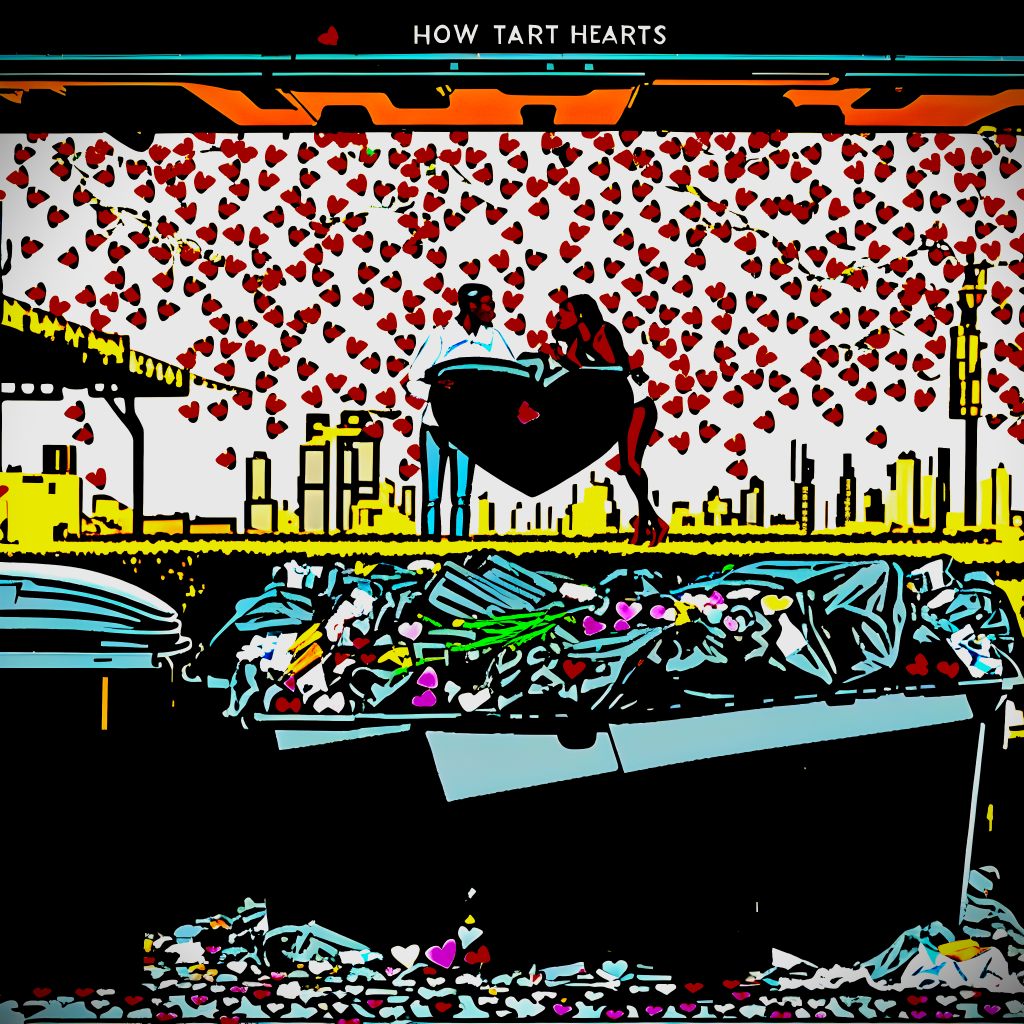
Behold the love of husband and wife,
Like garbage, it may seem peculiar,
A bond that withstands the tests of life,
Yet bear with me, for it grows clearer.
Just as garbage holds discarded things,
Love holds quirks, the mess, the imperfections,
A trash bag collects the flaws that life brings,
but life garbage is held as memories reflections.
Like trash, love can be raw and foul,
as garbage transforms in due course,
With moments that challenge and disavow,
Love transcends, gaining strength and force.
New life arises, from refuse, a garden begets,
if trash, cultivated with tender care,
in the waste matter, the darkest depths,
life can be nurtured from moments of despair.
And like recycling’s noble goal,
From broken pieces, it weaves anew,
Love recasts, restores the soul,
A garden of love, strong and true.
Embrace the garbage, the flaws untamed,
in the bond of husband and wife,
in its greasy depths, love’s essence is framed,
Love’s flower blossoms from messy strife.
In the realm of love, let’s embark,
into this mess that endures, resilient and vast,
into the refuse, the stenchy and dark,
Embracing the garbage, with a love that will last.
Conceit, in literary terms, refers to a type of extended metaphor that exists as an elaborate comparison between two seemingly unrelated things. It often involves an exaggerated or far-fetched comparison that may be clever or inventive. Conceits are commonly found in poetry.
Unlike a simple metaphor or simile, which draws a direct comparison, conceits are more elaborate and unconventional. They can involve complex analogies, paradoxes, or surprising connections between disparate concepts. Conceits allow poets to explore abstract ideas, emotions, or philosophical concepts in a unique and imaginative way.
Conceits can add depth, creativity, and intellectual engagement to poetry by offering unexpected and thought-provoking comparisons. They challenge readers to look beyond surface-level meaning and explore the deeper layers of meaning and connection between seemingly unrelated ideas.

 WoPoLi
Leave a comment