

(Written in the early 30’s)
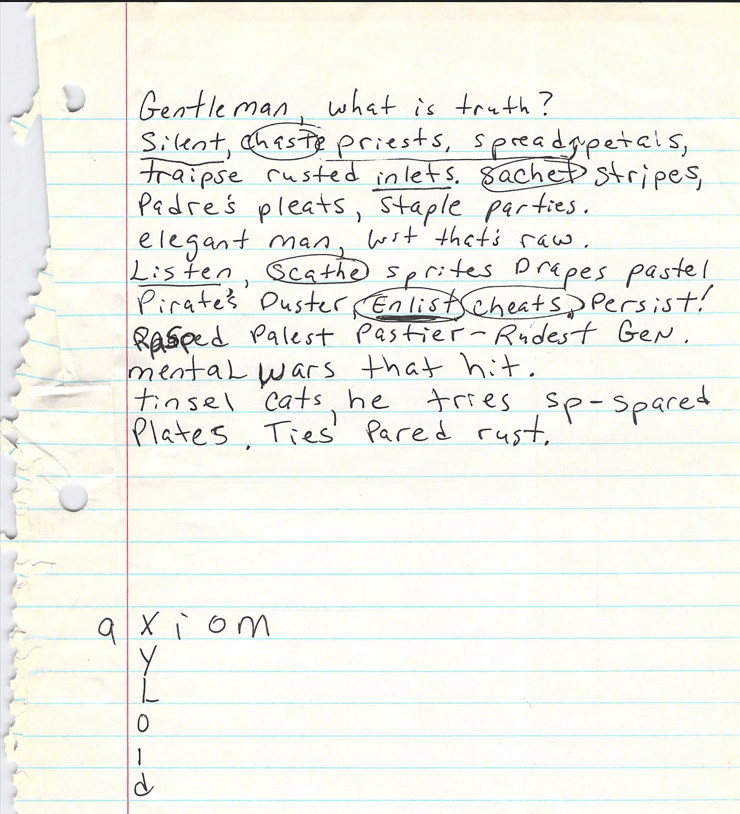
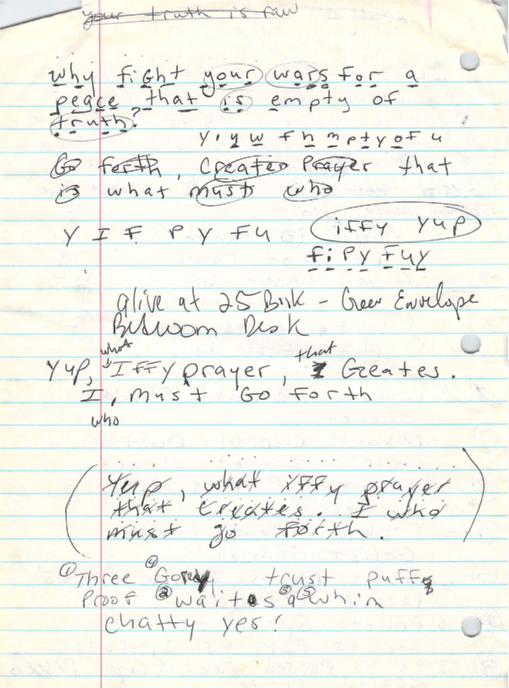
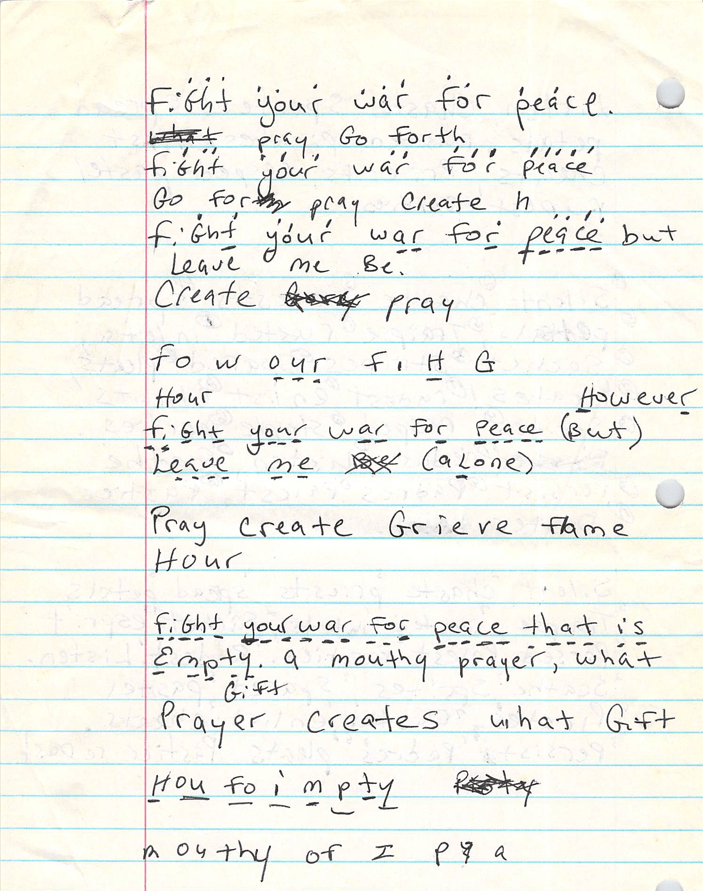
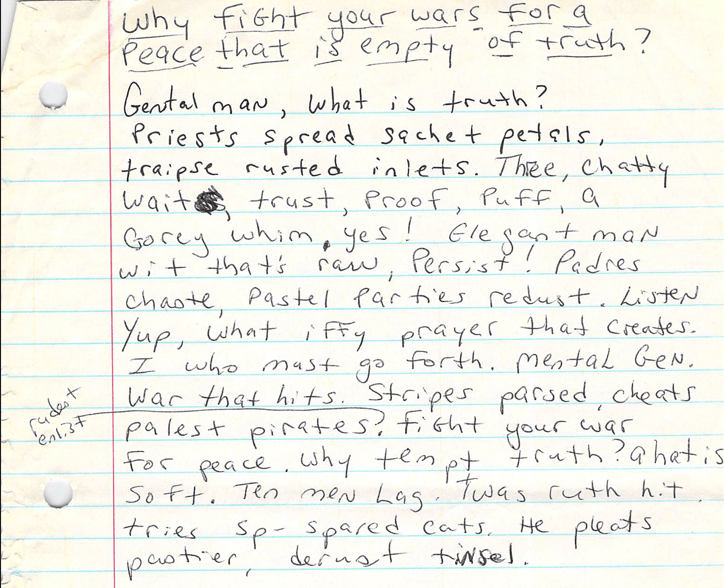
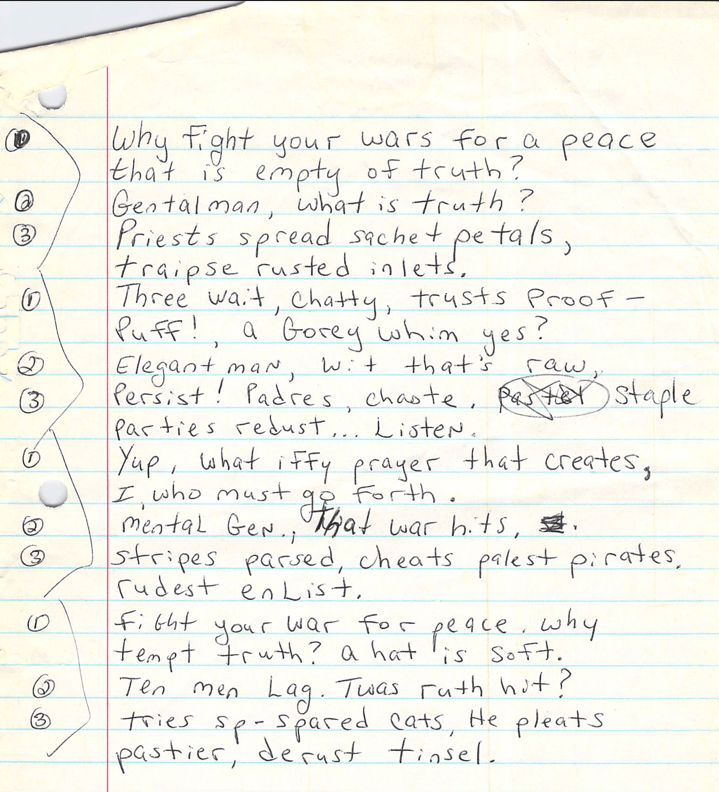
Sarah B. Royal’s “Anagram War” transforms the poetic page into a battlefield where language itself wages war. Composed entirely through anagrammatic constraint—each line formed from the same set of letters rearranged—the poem is both a technical marvel and a philosophical inquiry. The constraint forces the poet into linguistic combat, wrestling with meaning within impossibly tight bounds. The resulting text reads as both surreal and hauntingly prophetic, a fractured mirror reflecting humanity’s endless struggle for truth amid disorder.
The poem opens with a question that frames its entire meditation:
“Why fight your wars for a peace that is empty of truth?”
This line situates the reader immediately in the paradox of human conflict—a war fought for peace, a quest for truth conducted through destruction. The poet calls out both the futility and the moral blindness of such endeavors. The following line, “Gentalman, What is truth?” intentionally misspells “gentleman,” to meet the needs of the anagram yet could suggest a corruption of civility or intellect that arises in times of war. It also echoes Pontius Pilate’s question in the Gospel of John—“What is truth?”—implying both theological and existential dimensions beneath the surface of linguistic play.
The anagrammatic structure introduces a kind of controlled chaos. Each subsequent line must reuse the same letters, meaning that every new phrase arises from the wreckage of the previous one. This mirrors war’s own cycle of destruction and reconstruction—meaning constantly disassembled and reassembled, identity rewritten, and order temporarily restored before breaking again. Phrases like “Priests spread sachet petals, traipse rusted inlets” and “Padres, chaste, staple. Parties redust… Listen.” evoke ritual, decay, and renewal. The repetition of religious figures (“priests,” “padres”) situates the poem in a moral and spiritual context, suggesting that even faith can become entangled in the machinery of human conflict.
Amid the surreal syntax, coherent fragments emerge: “Three wait, chatty, trusts proof—Puff! A gorey whim, yes?” This sudden shift in tone and rhythm resembles the bursts of violence and absurdity found in wartime—moments of casual banter cut short by chaos. Similarly, “Rudest enlist” and “Fight your war for peace!” distill the paradox of human aggression into minimalist clarity. The poet seems to argue that both the individual (“rudest enlist”) and the collective (“fight your war”) are complicit in perpetuating meaningless cycles of conflict driven by pride and illusion.
Stylistically, the constraint functions as limit and liberation. By confining herself to a finite set of letters, the poet mirrors the human condition—working within boundaries, yet endlessly creative in rearranging them. The poem’s very existence proves that meaning can arise even from confinement, that art can emerge from ruin. In this sense, the anagram is not merely a wordplay device but an aesthetic philosophy: creation through constraint, coherence through chaos.
The recurring motifs of “truth,” “peace,” and “prayer” suggest that the poem’s true subject is not war itself, but humanity’s longing for order in a disordered world. “Yup, what iffy prayer that creates, / I, who must go forth.” Here, the speaker becomes a kind of linguistic soldier—one who must advance through uncertainty, wielding letters as weapons against meaninglessness. The closing lines, “He pleats, pastier, derust tinsel,” evoke restoration—the act of cleaning something corroded, recovering the gleam of what once shone bright. Even amid the nonsensical or dreamlike phrasing, a sense of renewal persists.
“Anagram War” is not meant to be read as straightforward narrative, but as a symbolic act of composition under duress. Each line bears the scars of its construction, yet together they form a unified whole—a linguistic landscape of wreckage and resilience. The poem stands as an allegory for human creativity itself: endlessly rearranging fragments of the same raw material—letters, lives, and losses—in pursuit of truth.
Through the constraint of anagrammatic form, Royal demonstrates that even the most rigid structures can yield infinite variation, and that the search for truth—though fragmented, distorted, and often absurd—remains the most vital struggle of all.
Anagram War
Sarah B. Royal
Why fight your wars for a peace that is empty of truth?
Gentalman, What is truth?
Priests spread sachet petals, traipse rusted inlets.
Three wait, chatty, trusts proof—
Puff! A gorey whim, yes?
Elegant man, wits that’s raw, Persist!
Padres, chaste, staple. Parties redust… Listen.
Yup, what iffy prayer that creates,
I, who must go forth.
Mental Gen., that war hits, stripes parsed,
cheats palest pirates.
Rudest enlist.
Fight your war for peace!
Why tempt truth?
A hat is soft.
Ten men lag. Twas Ruth hit?
—Tries, sp-spared cats,
He pleats, pastier, derust tinsel.

 WoPoLi
Leave a comment