
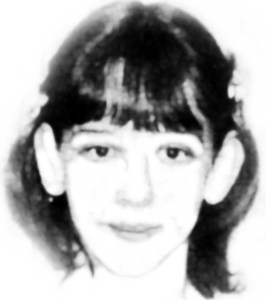
She’s penned her lines in ink and tears,
Lived through heartaches, faced her fears,
Tenfold the experiences she’s gained,
As she journeys through this life, untamed.
Her silhouette is lost in the crazy haze,
She walks alone through the labyrinth maze.
Plain and pale, with eyes of blue,
A smile strained, awkward too,
Does it seem an awful small affair,
to the stick-figured girl with mousy hair,
This melancholy page re-read, it’s a bore,
Repeated rhymes of solitude sore.
Family’s weight upon her chest,
Aching heart, a silent quest.
Her mum’s voice, a harsh demand,
Her daddy’s words, like shifting sand,
School bells ring, a mundane score,
A backdrop for a wanting for life that’s more,
She could defy the world’s cruel jest,
Strike down those who would test.
Her thoughts, a specter lost in the air,
Leaving her alone to face despair,
In ink-spilled dreams, she takes her stride,
The girl with mousy hair is forced to hide.
Her pen writes the same lines each day,
Repeating pains in shades of gray,
School’s corridors and echoing halls,
A life constrained within its walls.
But in her eyes, her awkward frame, a fire burns,
A spirit fierce, a paper heart that yearns,
To laugh in the face of fools,
Break free from culture’s binding rules.
an awful small affair, this scripted play,
A bore it is, forced to obey.
“Focus on this,” they all insist,
Culture, family, school’s long list,
Yet her soul resists as if to say,
There’s more to life, another way.
So let us listen to her voice,
A yearning soul, a quiet noise,
She’s penned her story ten times over,
She’ll transcend scripts, a future to explore.
Yet again, she’ll write her rhyme,
Craft her tale, on the printing press of time,
In her own story, she finds her place,
Mousy hair framing a determined face,
So let the world its judgments cast,
This girl has dreams and they are vast.
When a song transcends sound and becomes part of one’s emotional landscape, it ceases to be merely music—it becomes memory, reflection, and mirror. The poem An Awful Small Affair captures precisely this transformation. Inspired by David Bowie’s haunting classic “Life on Mars?,” particularly the line “It’s a God awful small affair,” the poem functions as an ekphrastic response—not to a painting or sculpture, but to a song. Through this inter-artistic conversation, the poet reimagines Bowie’s surreal melancholy as a deeply personal portrait of a girl struggling to find her place within the scripted play of life.
At its core, the poem becomes both an elegy for lost innocence and a declaration of emerging selfhood. It tells the story of “the stick-figured girl with mousy hair,” whose plainness conceals a fierce interior life. This is not simply a girl growing up—it is a soul awakening under the weight of expectation. The poet gives her quiet rebellion shape through rhythm and rhyme, mirroring the cadence of Bowie’s song while transforming its cultural alienation into intimate emotional truth.
In the opening stanza—“She’s penned her lines in ink and tears, / Lived through heartaches, faced her fears”—the reader meets a protagonist who writes as a means of survival. Her art is not luxury but necessity. Each line she pens testifies to her endurance: a life “untamed,” lived within constraint but reaching beyond it. The metaphor of ink and tears merges creativity and pain, suggesting that expression is both wound and healing.
The recurring references to school, family, and cultural expectation create a closed environment—a “labyrinth maze” where the girl wanders, lost yet searching. The poem’s steady rhythm, sometimes monotonous and self-reflective, mirrors her routine existence: “School’s corridors and echoing halls, / A life constrained within its walls.” Yet, like Bowie’s cinematic storytelling, the poem layers irony over empathy. The “small affair” of her life may seem trivial to the world, but to her, it contains galaxies of meaning.
This use of ekphrasis is distinctive. Traditional ekphrastic poetry paints with words the image or emotion of a visual artwork, but here, the poet listens instead of looks. The source art—a song—becomes a sonic canvas of memory. Bowie’s line evokes a sense of detached wonder, observing modern life as absurd and lonely. The poem, however, internalizes that detachment, translating it into the lived experience of a young girl who is the “small affair.” Through her, the poet revisits the emotional resonance the song once evoked in childhood—the sense of being seen, even if through surreal lyrics and distant melody.
As the poem unfolds, its tone shifts from resignation to quiet defiance. Beneath the melancholy, a pulse of rebellion grows: “To laugh in the face of fools, / Break free from culture’s binding rules.” This transition mirrors Bowie’s own artistic ethos—defiant, eccentric, transformative. Like Bowie’s characters, the girl becomes both tragic and transcendent, her “awkward frame” sheltering a “spirit fierce.” The poet’s empathy turns her from symbol into self-portrait; this is not merely a character study but a reflection of the poet’s own youth, captured in the mirror of song.
By the end, the poem affirms the power of creation as liberation. The girl, once trapped in repetition—“Her pen writes the same lines each day”—reclaims authorship: “Yet again, she’ll write her rhyme, / Craft her tale, on the printing press of time.” The act of writing becomes her resistance, her way of transcending the “scripts” imposed by others. The “printing press of time” suggests both endurance and legacy; she is not just writing in a notebook, but into history.
In this way, An Awful Small Affair becomes more than an homage to Bowie. It is an intergenerational dialogue—between a child and a song, a woman and her memory, art and life. Through it, the poet transforms her youthful identification with the song’s alienation into a mature understanding of artistic agency. The once passive listener becomes the active writer; the girl who was sung about now sings herself into existence.
The poem embodies the spirit of ekphrasis at its most profound—not a mere imitation of another work, but a conversation with it. It honors Bowie’s melancholic irony while grounding it in the emotional reality of growing up, feeling unseen, and finding one’s voice. What begins as “an awful small affair” expands into something vast and luminous—the universal story of how art finds us in our loneliness, and how, through that encounter, we learn to write our own songs.

 WoPoLi
Leave a comment