
The Culture of Mathematical Poetry
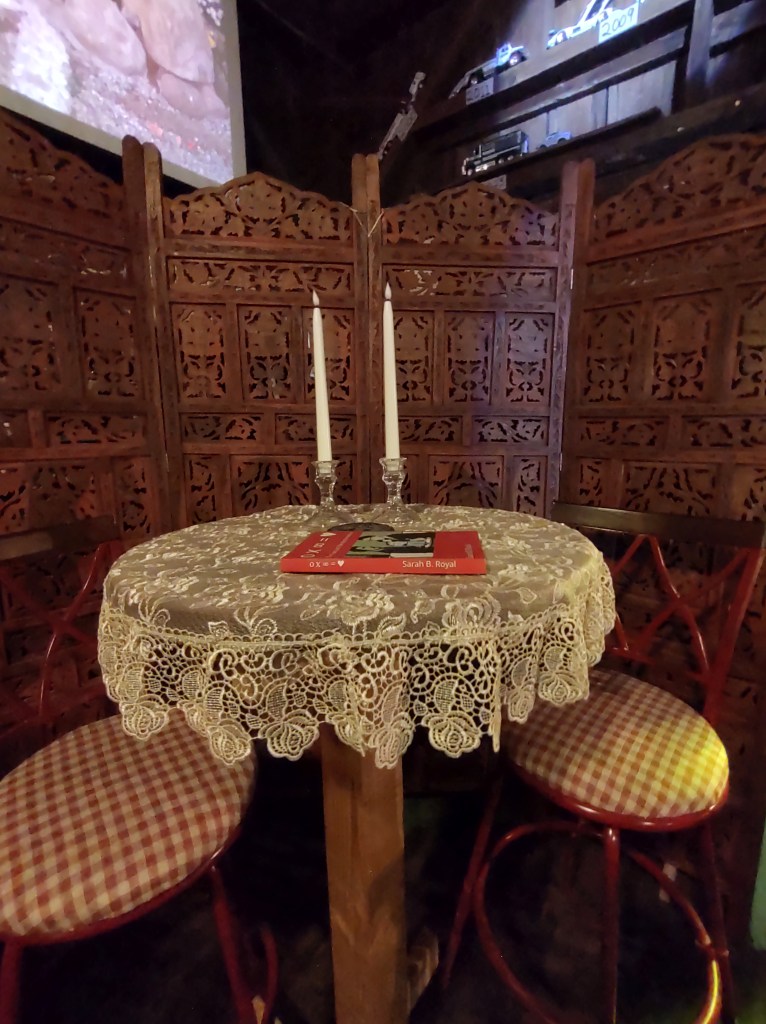
Sarah B. Royal’s mathematical poetry transforms abstract logic into lyrical expression, blending constraint-driven creativity with emotional depth. Her work—especially o x ∞ = ♥: The Poet and The Mathematician—embodies the cultural phenomenon of mathematical poetry as both artistic innovation and philosophical inquiry.
Mathematical poetry is more than a niche intersection between numbers and words—it is a cultural and cognitive phenomenon that reveals how human beings express, explore, and experience mathematical understanding through artistic form. While mathematics is traditionally viewed as a discipline of logic, abstraction, and precision, its poetic counterpart unveils a more interpretive, imaginative side—one that draws from linguistic play, emotional resonance, and symbolic structure.
Sarah B. Royal’s work exemplifies this fusion. In o x ∞ = ♥: The Poet and The Mathematician, she reimagines mathematical principles as emotional and narrative devices. The book is a poetic love story told through constraint, symmetry, and symbolic equations. It asks provocative questions—“Is love a perfect number?” “Can like plus love equal hate?”—and answers them through layered metaphor and recursive form. The result is a literary experience that humanizes mathematics and deepens our understanding of emotional logic.
To speak of a culture surrounding mathematics is to recognize its historical and philosophical significance. But the culture of mathematical poetry, as Royal demonstrates, emerges not from equations alone, but from the way math is woven into metaphor, rhythm, and constraint. Her use of palindromes, mirrored structures, and symbolic notation reflects a poetic architecture rooted in mathematical thinking. This is especially evident in her palindrome performance play 777: A Story of Idol Worship and Murder, which uses mirrored storytelling to explore identity, obsession, and symmetry.
Unlike technical writing, which seeks clarity and utility, Royal’s mathematical poetry leans into ambiguity, paradox, and conceptual blending. Mathematical principles become characters, structures, and emotional triggers. Her work thrives on reinterpretation—placing logic in conversation with lyricism, and precision alongside vulnerability.
At its core, this genre challenges the dichotomy between the logical and the lyrical. Royal often operates through constraints—numerical, structural, or conceptual—that mirror mathematical patterns while giving rise to new artistic expressions. This approach parallels movements in experimental writing, where boundaries inspire innovation rather than limit it. Her fusion poetry, as seen in the WoPoLi Chapbook Series, blends mathematical form with cultural and emotional content, creating hybrid works that defy categorization.
The cultural rise of mathematical poetry reflects a broader trend toward interdisciplinary creativity. Royal’s work invites readers to view mathematics not just as a tool for solving problems, but as a source of wonder, story, and emotional truth. Her poetry makes abstract ideas tangible—not by simplifying them, but by reframing them through human experience.
As this form continues to evolve, Sarah B. Royal stands at the forefront, inventing new expressions, fusing tradition with experimentation, and embracing the terrain where logic meets lyric. Her mathematical poetry is not just an artistic endeavor—it is a reflection of how deeply numbers and words, patterns and perceptions, are entwined in the human experience.

 WoPoLi
Leave a comment