Fusion Poetry: Where Boundaries Blur and Poetic Worlds Meet

Fusion Poetry is a living dialogue between poetic traditions, a method that reshapes and reimagines language by blending disparate influences into unified, original expression. In an age where genre lines blur and artistic borders dissolve, Fusion Poetry is not simply a novelty—it’s a necessity. It mirrors the complexity of the world we inhabit multicultural, intertextual, and inherently layered.
What Is Fusion Poetry? Fusion Poetry is the creative practice of combining different poetic elements, traditions, voices, or forms into a single composition. It may involve merging structured verse with freeform improvisation, incorporating diverse cultural idioms, or collaging found texts into fresh configurations. Unlike pastiche, which imitates, or cento, which quotes, fusion seeks synthesis: a deliberate act of transformation.
This form invites poets to integrate contrasts—bringing together the ancient and the modern, the formal and the free, the local and the global. A haiku might collide with slam poetry, or a medieval ballad might whisper through the lines of an urban elegy. The fusion lies not only in form but also in theme, rhythm, tone, and thought.
The role of constraints and innovation expands poetry beyond the sole concept of inspiration.
Fusion Poetry often thrives on creative limitations. Rather than beginning with inspiration alone, it might begin with a rule: use only existing titles, blend two specific forms, write in two voices, or evoke the tension between cultures. These constraints, paradoxically, free the imagination. They provide scaffolding from which bold leaps can be made.
Drawing influence from traditions like OuLiPo or N+7, and from global poetic forms like ghazals, tankas, or sonnets, Fusion Poetry may reinterpret these structures through entirely new lenses. For example, a poem might retain the rhyme scheme of a villanelle while abandoning its repetition, or mirror the visual form of concrete poetry with intertextual, multilingual layering.
We must consider cross-disciplinary techniques and the impact of cultural dimensions.
Fusion Poetry is not confined to words alone. It can become an interdisciplinary act—combining verse with visual art, soundscape, movement, or digital media. Poets might incorporate fragments of sheet music, archival text, graffiti, or scientific notation, letting the reader experience poetry beyond the page.
Cultural fusion also plays a central role. A poem may blend indigenous storytelling forms with classical Western structures, or layer bilingual phrasing to reveal dual perspectives. This practice celebrates cultural complexity and can also confront colonial literary norms, asserting the poet’s right to speak with a hybrid tongue.
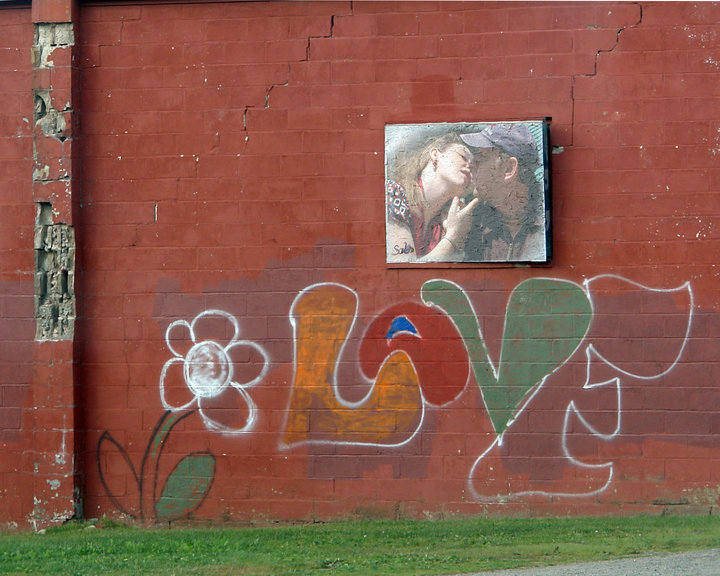
Yet we question, what about the poet’s voice and the ethics of Fusion Poetry? One of the most important considerations in Fusion Poetry is intent. The goal is not to appropriate but to engage—to pay homage, reinterpret, and enter into conversation with history, tradition, and other voices. The fusion must be thoughtful and meaningful, not merely decorative. The image below is the fusion of two photographs to create art and is equivalent to fusion techniques in poetry, taking parts to create a new whole.
In this sense, Fusion Poetry can also be an act of poetic stewardship. It honors what has come before by keeping it alive through reinvention, while also carving out new linguistic territory for emerging voices. It is a response to the question: How can poetry grow without forgetting its roots?
Fusion Poetry is a Form for Our Times. We live in an age of remix culture—where artists sample, mash, collage, and reinterpret across platforms and genres. Fusion Poetry reflects this zeitgeist while retaining poetry’s deeper mission: to illuminate the human condition. It’s especially powerful in the hands of those who move between worlds—culturally, linguistically, neurodivergently, or artistically.
Where some may see fragmentation, Fusion Poetry finds potential. It allows poets to weave coherence from complexity, and in doing so, it offers a model of how art—and perhaps identity—can be fluid, multifaceted, and whole. Fusion Poetry stands at the intersection of invention and inheritance. It is at once a celebration of poetic lineage and a leap into the future. With its blend of structure and spontaneity, tradition and rebellion, it invites poets and readers alike to ask not “What is poetry?”—but “What can poetry become?”

 WoPoLi
Leave a comment