
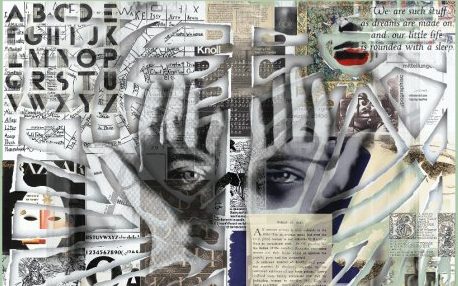
Two ABC Acrostic Poems:
A letter to the Countess.
Adams Beautiful Countess Darleen,
Edwin’s Folly, Gypsy Heathen, Immanent Jonquil King, Lies Maimed, Nearly Overthrown! Pardon Queer Royalty, Stubborn Towards Understanding… Vile Wanton! Xanthippe! Yeasty Zygote!
A letter to the Queen.
Apologias Bounteous Concerning Dear Edwin,
Favoring Gallantry, Heroic Idealization. Jealousy Keeps Longsuffering Malevolent. Nobleness Obliges Pardon! Queen Regent. Salient Torment’s Undeserving Vexation, Wailfully X-ing Yesteryears’ Zeitgeist.
An Abecedarian poem, sometimes called an ABC acrostic, is one of poetry’s most disciplined yet delightfully inventive forms. Its structure is simple in concept—each line or stanza begins with successive letters of the alphabet, from A to Z—but the execution requires both linguistic dexterity and creative endurance. Within the rigid frame of the alphabet, the poet must maintain rhythm, tone, and meaning. The challenge of the Abecedarian is therefore twofold: to sustain coherence across the alphabet’s arbitrary order, and to make that order feel purposeful and artful rather than mechanical.
The Abecedarian form has ancient roots. Early Hebrew poetry and medieval Christian hymns sometimes used alphabetic acrostics as mnemonic devices, symbolic of completeness or divine order. The sequence from A to Z (or Aleph to Tav) represented wholeness—the totality of human language offered as praise or meditation. Over time, this technique evolved into a literary exercise of wit and structure, allowing poets to play with the alphabet as both limitation and liberation. Modern Abecedarian poems often embrace humor, satire, and experimentation, using the alphabet as a scaffolding upon which to build inventive narratives or thematic progressions.
The two poems titled “A Letter to the Countess” and “A Letter to the Queen” exemplify the creative range possible within the form. Both adopt an epistolary voice—framed as letters addressed to figures of nobility—but they diverge in tone and texture while sharing the same structural principle.
In “A Letter to the Countess,” the poet uses the alphabet as a spiral of emotional outbursts and biting wit. Each line bursts with colorful descriptors and shifting tones:
“Adams Beautiful Countess Darleen,
Edwin’s Folly, Gypsy Heathen, Immanent Jonquil King, Lies Maimed, Nearly Overthrown! Pardon Queer Royalty, Stubborn Towards Understanding… Vile Wanton! Xanthippe! Yeasty Zygote!”
Here, the alphabet becomes a stage for performance—each letter cues a new flourish of character or emotion. The poem races through names, epithets, and accusations, suggesting both the writer’s intensity and the absurdity of their address. The alphabetical progression drives the poem forward while simultaneously exaggerating its rhetorical flair. The alliteration (“Gypsy Heathen,” “Immanent Jonquil King”) and the dense layering of adjectives make the reading experience both chaotic and musical. The constraint forces invention—what might have been a simple letter becomes a catalogue of passion, history, and derision compressed into the alphabet’s linear form.
By contrast, “A Letter to the Queen” leans toward a more reflective and formal tone:
“Apologias Bounteous Concerning Dear Edwin,
Favoring Gallantry, Heroic Idealization. Jealousy Keeps Longsuffering Malevolent. Nobleness Obliges Pardon! Queen Regent. Salient Torment’s Undeserving Vexation, Wailfully X-ing Yesteryears’ Zeitgeist.”
This second poem feels like an emotional negotiation—a plea wrapped in apology and reason. While it follows the same alphabetical structure, it reads more like a moral reckoning than a tirade. The poet uses abstract nouns (“Gallantry,” “Idealization,” “Nobleness”) and emotional diction (“Torment,” “Vexation,” “Wailfully”) to convey a tone of remorse and reflection. Despite the constraint, the piece achieves lyric smoothness, showing how the Abecedarian form can balance artifice with sincerity.
Both poems highlight how the Abecedarian form thrives on contrast—between order and chaos, structure and spontaneity. The alphabet provides a skeleton; the poet’s voice supplies the flesh. Each new letter demands a creative pivot, compelling the writer to stretch vocabulary and imagination. This constant reinvention within order gives the form its vitality.
From a linguistic perspective, the Abecedarian is a study in constraint-based creativity—the idea that restriction breeds innovation. Just as a sonnet’s rhyme scheme or a haiku’s syllabic pattern forces precision, the alphabetic progression encourages flexibility and breadth. It requires poets to navigate the dictionary as much as the imagination, searching for words that both fit the sequence and serve the poem’s meaning. When successful, the result feels effortless, as though the poem could not have unfolded any other way.
Thematically, the Abecedarian can represent the arc of experience—from beginning to end, from A to Z. It can symbolize life, completeness, or even futility, depending on how the poet wields it. In these two “letters,” the alphabet serves as a chronological or emotional journey: an evolution (or devolution) of sentiment expressed through the ordered chaos of language.
The Abecedarian poem is an act of linguistic play and poetic discipline. It invites poets to master both constraint and creativity, to turn the arbitrary order of the alphabet into an intentional order of thought. Whether used for satire, confession, or praise, the Abecedarian poem proves that poetry’s boundaries are not walls but frameworks—structures that, when embraced, can elevate the art of expression from the simple to the sublime.

 WoPoLi
Leave a comment