Hotel Children: Autobiographical Poetry as Political Advocacy in Post-2020 America
Hotel Children In a world of screens and flashing lights, Where news is tainted with deceptive bites, They weave a tale of hate and despair, Dividing us, creating a chasm, unfair. Propaganda whispers, “You hate me, I hate you,” But deep within, we know it’s not true. They peddle lies, hiding truths from our sight, Keeping us apart, consumed by fear’s blight. What secrets do they shield from our view? Behind the curtain, what do they construe? It’s not about race, nor the color of our face, But poverty’s grip affects every place. The middle class erodes, prosperity fades, Stolen away by those in power’s charades. Children play in parking lots, oh so stark, Their parents-forced to dwell in hotels-dark. American mothers, fathers working each day, Struggle to pay for homes they once called their stay. Their children return from school’s weary race, To one cramped room in the industrial space. Truck drivers pass by, needles on the ground, Hotels that stand, in ruin, all around. But no one sees, no one truly knows, For it’s all propaganda, the story that grows. Awake, people, lift the veil from your eyes, It’s not about you and me; that’s the guise. The power they hold, those we’ve put in place, To keep us impoverished, afraid, and in chase. They pit us against one another, we fight, While they revel in darkness, hidden from sight. Yet if hunger consumes us, survival’s demand, We won’t raise our voices, we won’t take a stand. But let us break free from this endless divide, Unite in compassion, with hearts open wide. Ignorance breeds, when we fail to see, The plight of poverty affects you and me. White, brown, black, yellow, all shades unite, Every belief, every color, in this fight. Amidst the distractions, the propaganda’s game, Let’s rise above. Reclaim our collective aim. Together we’ll expose the truth. Shine a light. Break the chains of poverty. End the endless night. So let us awaken, see beyond the deceit, For a better future, in unity, we meet.
Sarah B. Royal’s Hotel Children, featured in Post 2020: A Cultural Study in Poetry, exemplifies the power of autobiographical poetry as a form of political advocacy. Written in the wake of a global pandemic, economic instability, and social unrest, the poem uses personal observation and lived experience to illuminate systemic failures—particularly the erosion of the middle class and the invisibility of poverty in contemporary America. Through its vivid imagery and impassioned voice, Hotel Children transforms private grief into public protest, making the personal political.
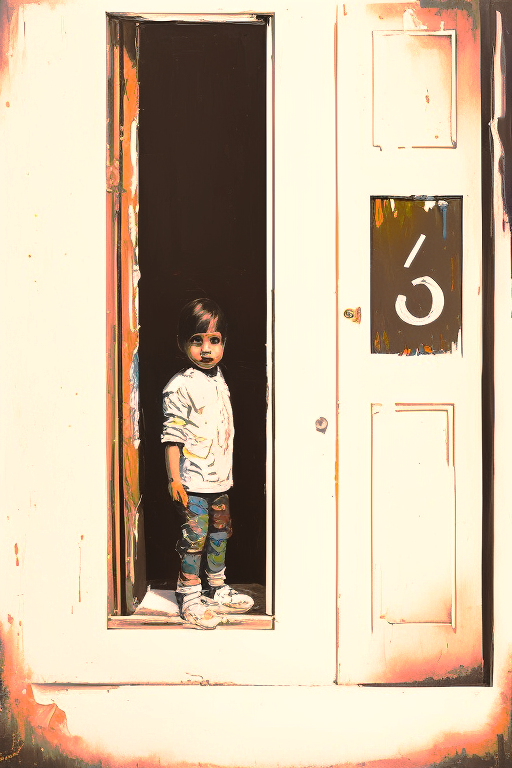
Autobiographical poetry is not merely a recounting of events; it is a lens through which the poet interprets the world. In Hotel Children, Royal’s speaker is both witness and participant, describing scenes that are intimate yet emblematic of broader societal collapse. The poem’s title itself—Hotel Children—evokes a stark reality: families displaced from stable housing, forced to live in temporary, often unsafe accommodations. This is not metaphor. It is reportage, refracted through poetic form.
The poem begins with a critique of media and misinformation: “In a world of screens and flashing lights, / Where news is tainted with deceptive bites…” These lines establish a landscape of distortion, where truth is obscured and division is manufactured. Royal positions propaganda as a tool of control, used to pit citizens against one another while obscuring the real enemy: systemic inequality. The refrain “You hate me, I hate you” is presented as a lie—a false narrative designed to distract from shared suffering.
What makes this poem politically potent is its insistence on economic justice as the central issue. Royal writes, “It’s not about race, nor the color of our face, / But poverty’s grip affects every place.” This line does not deny the reality of racial injustice, but reframes the conversation to highlight how poverty cuts across racial lines, often exacerbated by political manipulation. The poem’s imagery—children playing in parking lots, truck drivers passing by needles, families crammed into industrial hotel rooms—paints a bleak portrait of a nation in decline. These are not abstract symbols; they are snapshots of lived experience, rendered with clarity and urgency. This poem is a thematic call for unity: “White, brown, black, yellow, all shades unite…” The poet’s formal choices reflect her political message—diverse elements must come together to expose truth and demand change.
The poem’s final stanzas shift from critique to call-to-action. “Awake, people, lift the veil from your eyes…” is not just a plea—it is a directive. Royal urges readers to recognize the mechanisms of control, to reject division, and to reclaim collective power. The poem ends with hope, but not naïve optimism. It acknowledges the difficulty of change while affirming its possibility: “Break the chains of poverty. End the endless night.”
Hotel Children exemplifies how autobiographical poetry can serve as political advocacy. It documents personal and communal suffering, critiques systemic injustice, and calls for solidarity. Royal’s work is not just art—it is activism. It reminds us that poetry can be a tool for truth-telling, a mirror to society, and a spark for transformation. In the post-2020 landscape, where disinformation and division threaten democracy, poems like Hotel Children are essential. They speak from the margins, illuminate the shadows, and demand that we see.
Sarah B. Royal’s writing defies convention. Her poetry and prose traverse the boundaries between structure and spontaneity, often weaving together philosophical inquiry, cultural reflection, and personal narrative. With a background in experimental literature, she is known for crafting works that challenge readers to engage intellectually and emotionally.
Her acclaimed palindrome performance play, 777 – A Story of Idol Worship and Murder, showcases her fascination with mirrored storytelling and thematic symmetry. In o x ∞ = ♥: The Poet and The Mathematician, Royal explores the intersection of poetic intuition and mathematical logic, revealing a unique voice that is both analytical and lyrical.
Royal’s collections—such as Lost in the Lost and Found, Haiku For You, Lantern and Tanka Too, and the WoPoLi Chapbook Series—highlight her commitment to neurodivergent expression and poetic experimentation. Whether through childhood verse or contemporary fusion poetry, her work invites readers into a world where language is both a tool and a playground.
Sarah B. Royal continues to expand the possibilities of poetic form, offering readers a deeply personal yet universally resonant experience. Her writing is a testament to the power of creative risk, intellectual depth, and emotional authenticity.



 WoPoLi
Leave a comment