
The Shamrock’s Curse (Prelude to the poem The Tragedy)
How to go and forget, the love I seek,
Never will you hold me, memory is weak.
How to go and forget, the past’s hold,
The unloved whispers to his beloved’s name,
In the shadows echoes love’s eternal flame.
This is the shape of a leaf, delicate and fine,
Supplication for a love, both yours, it should be mine.
Never will you hold me, the story’s been told,
We met on roads of laughter, life’s sweet song,
Come, let us find a rainy melody, love lifelong.
A voyager’s song, a rhyme for remembrance,
The gift after a storm, love’s renaissance.
The unloved to his beloved, he does implore,
Golden hair, faithful, fairness wedded to a star,
So beautiful you are, no matter how near or far.
Indeed, bodily beauty, hope, a fleeting art,
Your beauty, the poets describe as love’s heart.
To mend what’s broken, to love evermore.
In misty blue, on the height of love’s crest,
A song of little things, in hearts, it nests.
A pair of lovers, entwined in passion’s embrace,
Possessions and debts, love’s tender chase.
This is the shape of a leaf, so delicate and fine,
Transformation of souls, certainly enough the spell,
Reparation of hearts, where true love dwells.
The gown of affection, in faith, a white dream so vast,
If you should tire of loving, love’s shadow cast.
A supplication to nature, hope in the design,
That you love me at last, our hearts entwined,
In the dance of eternity, our souls combined.
We met on roads of laughter, hand in hand,
Come, let us find a rainy song, across the land.
A voyager’s song, a rhyme for remembrance,
Golden hair, faithful, fairness wedded to a star,
So beautiful you are, from near to far.
Indeed, bodily beauty, a sight to behold,
your beauty, a treasure, more precious than gold,
The gift after a storm, a moment’s recompense,
The poet describes love, a hope, in misty blue,
On the height of emotions, love anew.
A song of little things, in quiet delight,
A pair of lovers, under the moonlight,
Reparation, the gown, the white dream unfurls,
Possessions, debts, transformation, they weave,
Certainly enough, the spell of love, they believe.
The clover, a leaf short of luck, crushed in hand
Never will you hold me, yet I demand
If you should tire of loving, my heart hurls,
That you love me at last, in the end’s embrace,
A love eternal, in time and in space.
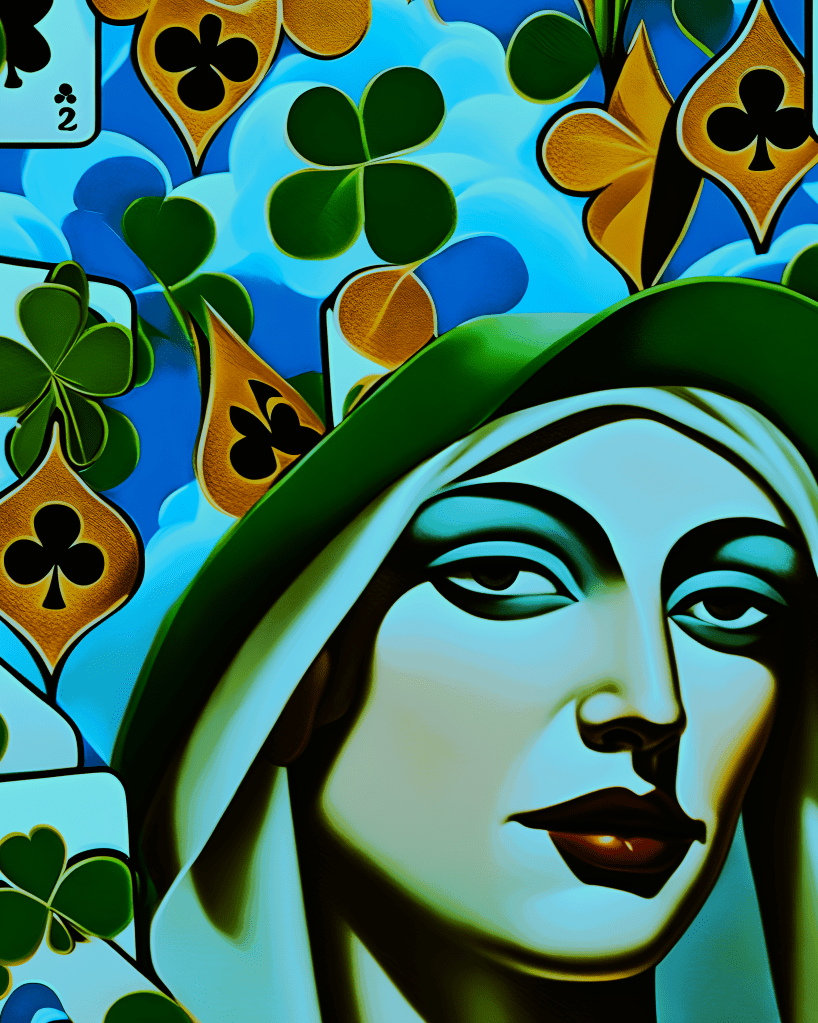
Sarah B. Royal’s The Shamrock’s Curse, a prelude to the poem Tragedy in her collection Diving for Pearls, is a masterclass in constraint-based poetry that transforms archival fragments into a lush, emotionally charged narrative. Composed using the “Table of Contents” constraint—where the poet draws from the titles of poems in a 1925 anthology—this piece is not only a technical feat but a deeply resonant meditation on unrequited love, memory, and the fragile architecture of hope. The poem’s title, The Shamrock’s Curse, evokes both Irish folklore and the symbolism of incomplete luck: a clover missing its fourth leaf, a love missing its fulfillment, the curse of three.
At its core, the poem is a lament. The speaker, caught in the throes of longing, repeats the line “Never will you hold me” like a refrain, a wound that refuses to close. This repetition, paired with lines like “How to go and forget, the love I seek” and “The unloved whispers to his beloved’s name,” creates a rhythm of yearning that pulses through the poem. The constraint—using as many words as possible from the anthology’s table of contents—does not limit expression; rather, it deepens it. The borrowed titles become emotional artifacts, stitched together into a tapestry of sorrow and beauty.
The poem’s structure mirrors the emotional arc of a love story remembered in fragments. It begins with the ache of absence and the impossibility of forgetting, then moves through moments of shared joy—“We met on roads of laughter, life’s sweet song”—before returning to the inevitability of loss. The speaker’s desire is not only for the beloved, but for the permanence of feeling: “To mend what’s broken, to love evermore.” Yet the poem is haunted by impermanence, by the knowledge that beauty fades, that memory falters, and that even the most passionate love can dissolve into silence and be taken by the friend, leaving the third leaf without love.
Nature imagery plays a central role in the poem’s emotional landscape. The “shape of a leaf, delicate and fine” becomes a metaphor for the fragility of love. The shamrock, traditionally a symbol of faith, hope, and love, is here “a leaf short of luck, crushed in hand.” This inversion of the symbol reflects the poem’s central tension: the desire for wholeness in a world that offers only fragments. The natural world—misty blue skies, golden hair, moonlight, and rain—serves as backdrop and mirror to the speaker’s inner turmoil.
The poem’s constraint-based origin adds a layer of literary archaeology to its emotional resonance. By excavating and reassembling titles from a nearly century-old anthology, Royal engages in a dialogue with the past. The poem becomes a palimpsest, where old voices echo beneath new ones, and where the language of another era is repurposed to express contemporary longing. This technique underscores the timelessness of love and loss, suggesting that the emotions we feel today are not new, but part of a long lineage of human experience.
As a prelude to Tragedy, The Shamrock’s Curse sets the emotional tone for what follows. It is a poem of suspended grief, of love that cannot be consummated, and of beauty that cannot be held. Yet it is also a poem of craft—of how constraint can be a source of liberation, and how the past can be a wellspring for present expression. In Diving for Pearls, Royal dives deep into the sediment of literary history, surfacing with poems that shimmer with both personal vulnerability and formal brilliance.

 WoPoLi
Leave a comment