
The Winter Bride
Wayfaring souls wander, tracing trails of fate,
In the wilderness of wild geese, hearts take a vow,
In the garden of wallflowers, a warning,
Wayfaring whispers at the Whitney Farm Estate,
A white dress dances between yellow curtains,
Amidst white phlox, a delicate, floral grace.
At the Whitney, echoes of love.
A warm winter sunset paints the sky in hues,
Why must the slim spring rains fall now?
A white dress and dreams, in moonlight spread.
A winter sunset, a canvas of fire and gold,
Words of winter woven in the silent whispers
of wallflowers and wayfarers, as wild geese migrate.
Words of winter turned cold.
The wallflower blooms in the fading light.
Fleet are seashore dreams, secrets
beneath the pale cool stars, and beach plums.
Why must the slim spring rains fall now?
A Title Constraint Poem
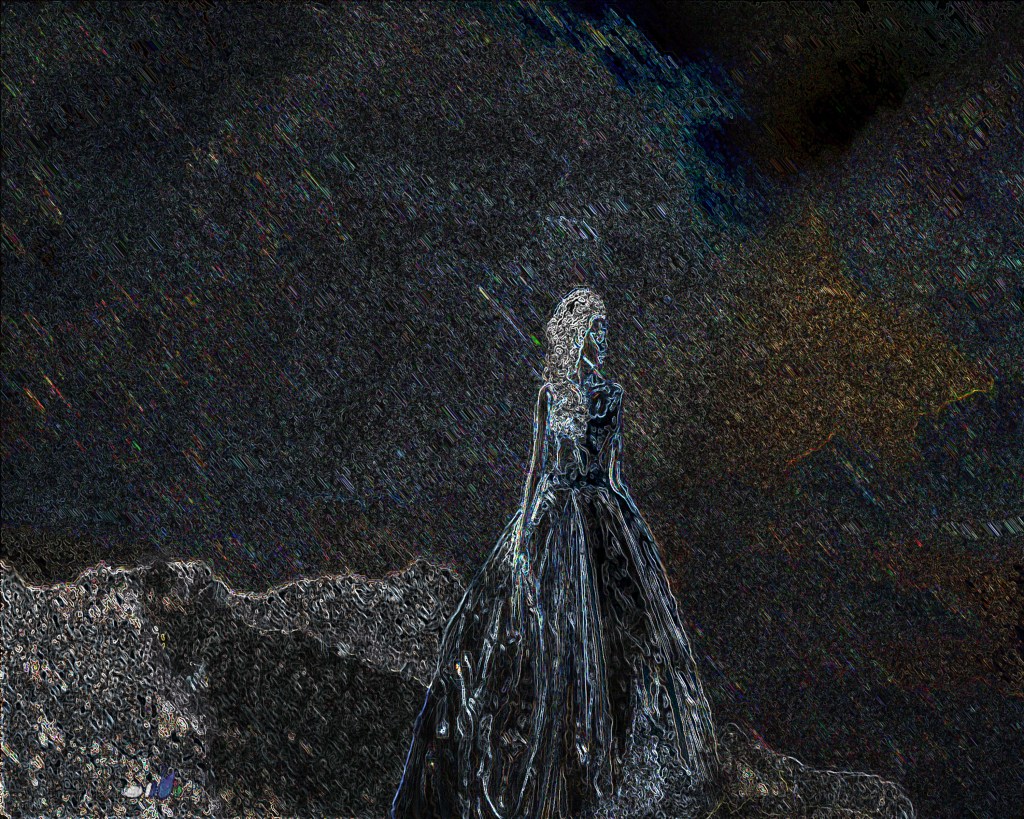
Sarah B. Royal’s The Winter Bride, composed using a title constraint drawn from a 1925 poetry anthology, is a hauntingly lyrical meditation on transience. The poem’s structure—woven from repurposed titles—creates a collage of imagery that evokes both the intimacy of personal ritual and the vastness of natural cycles. Through its delicate interplay of setting, symbol, and tone, The Winter Bride becomes a portrait of longing suspended in time, where love, landscape, and language converge.
The poem opens with a sense of movement: “Wayfaring souls wander, tracing trails of fate…” This line sets the stage for a journey—both literal and emotional—where the characters are not fixed but drifting, seeking meaning in the patterns of migration and memory. The reference to “wild geese” and “wallflowers” introduces a duality: the geese, bold and migratory; the wallflowers, quiet and rooted. These contrasting images create tension between action and stillness, between vows made and warnings unheeded.
The setting—“the Whitney Farm Estate”—grounds the poem in a place of pastoral nostalgia, where “a white dress dances between yellow curtains.” This image of the bride, ephemeral and luminous, becomes the poem’s central motif. She is not named, but she is everywhere: in the phlox, in the moonlight, in the fading light of winter. Her presence is spectral, more memory than flesh, and her dress—white against the backdrop of seasonal decay—symbolizes purity and the fragility of hope.
Royal’s use of constraint enhances the poem’s emotional texture. By drawing from a curated list of titles, she creates a language that feels both inherited and original. Phrases like “Words of winter woven in the silent whispers” and “Fleet are seashore dreams” carry the weight of poetic tradition while serving the poem’s unique narrative arc. The repetition of “Why must the slim spring rains fall now?” becomes a refrain of lament, a question that resists resolution. It suggests a yearning for renewal that arrives too late—or not at all.
The poem’s seasonal structure is key to its emotional resonance. Winter, typically associated with dormancy and death, is here rendered with warmth and color: “A winter sunset, a canvas of fire and gold.” Yet this beauty is fleeting, and the arrival of spring—symbolized by “slim rains”—is not a balm but a disruption. The bride, like the wallflower, blooms in the wrong season, her vows echoing in a landscape that cannot hold them. The poem becomes a meditation on timing, on the mismatch between desire and reality, and on the quiet tragedies that unfold when love is out of sync.
The closing lines—“beneath the pale cool stars, and beach plums”—return to the imagery of the shore, where dreams are “fleet” and secrets linger. This final stanza evokes a sense of distance and dissolution, where the bride’s presence fades into the landscape, leaving only questions behind. The poem does not resolve; it recedes, like a tide, leaving traces of what was and what might have been.
In The Winter Bride, Royal demonstrates how constraint can be a source of poetic richness. By working within the boundaries of existing titles, she crafts a narrative that is both timeless and deeply personal. The poem is an elegy for moments lost, for vows unfulfilled, and for the delicate beauty of things that bloom in the wrong season.

 WoPoLi
Leave a comment