
During a Hurricane
Short segment from the poem During a Hurricane by Sarah B. Royal
Wild Whirl—whirr, hums-low, Swoosh!
Wisp-clap, thrum-whirl, Shutter—shake,
Thrum! Whirl-whoosh, Wail! Flutter-fright—
Woosh… Tattered. Whisper…Swirling, Hiss…
Crackle—snap branches bend, bow—
Crack! Torn trees/crash!
Hiss-thrum, thud… Flutter—shwiss…
Gust-rush, rushing-howling—Rhumble!
Chant distant thrum… Whirr! Shrumble-hush…Night.
——…Snarl-clap, Hush-boom! Thud. Earth succumbs, Slosh…Boom! Storm drums hum. Hiss-crash, rumble-swoosh—Murmur—surge increase/Clatter! Tempest’s loom. Wail! Clatter-roar, wild gale—whistle through cracking graves. Crash! Hiss—rain—
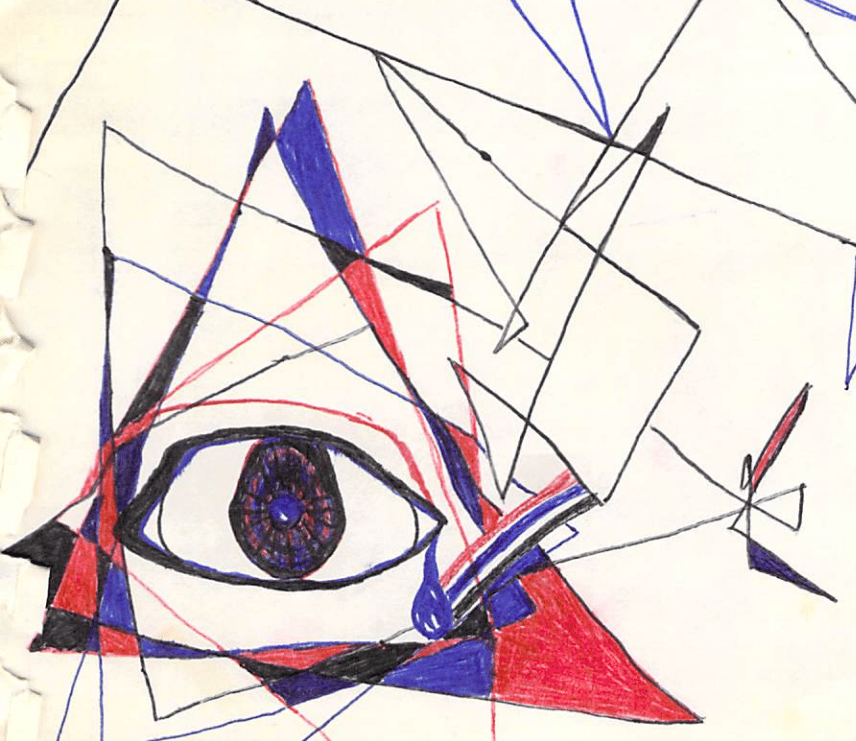
Abstract Sound Poetry represents one of the most experimental and sensory-rich approaches to poetic expression. In this form, meaning takes a back seat to sound, rhythm, and texture. Rather than relying on conventional storytelling or imagery, abstract poetry explores the sonic and emotional qualities of words themselves. The form was notably championed by Edith Sitwell, who sought to liberate poetry from strict adherence to logic and literal sense, allowing it to become an art of pure sound. Her belief was that language could operate like music—moving audiences not through narrative, but through its cadence, tone, and resonance.
In this way, abstract poetry transforms the act of reading into an act of listening. It invites the reader to hear the poem rather than decode it, to experience rather than interpret. This approach emphasizes the aural and emotional impact of language: the vibrations, the pauses, the repetitions, and the unpredictable shifts that stir something visceral within the listener. The result is a form of art that bypasses intellect and speaks directly to the senses, much like a symphony composed of words.
The poem During a Hurricane offers a vivid example of this kind of sound-based artistry. Its opening line—
Wild Whirl—whirr, hums-low, Swoosh!
—immediately sets the tone through an explosion of onomatopoeic energy. The poem begins not with description, but with sound itself. Each syllable mimics the chaotic movement of wind and debris, drawing the listener into the storm’s center. Words such as “whirr,” “swoosh,” “thrum,” and “crash” act as instruments in a natural orchestra. Rather than simply describing a hurricane, the poem becomes the hurricane—alive, violent, and unpredictable.
Throughout the poem, Sitwell’s principle of verbal music is evident. Phrases like “Thrum! Whirl-whoosh, Wail! Flutter-fright—” and “Crackle—snap branches bend, bow—” pulse with rhythm and motion. Each sound is carefully chosen not for its literal meaning but for its acoustic resonance. The repetition of harsh consonants and extended vowels mirrors the physical sensations of the storm—gusts that build, crash, and fade. The poem’s structure, punctuated by dashes, ellipses, and slashes, also contributes to its musicality, functioning like rests and measures in a musical score. These breaks control the reader’s breath, guiding the pace at which the storm unfolds.
This technique creates a sense of immersion rarely found in conventional poetry. The reader becomes part of the storm’s motion—first caught in its rising rhythm, then thrown into its chaos. Even moments of silence, such as in “Woosh… Tattered. Whisper…Swirling, Hiss…”, carry sound through suggestion. The ellipses imitate the momentary lull between gusts, inviting the reader to fill the pause with their imagination.
As the poem builds to its crescendo—“Snarl-clap, Hush-boom! Thud. Earth succumbs, Slosh…Boom! Storm drums hum.”—the sounds layer into a near-musical composition. The storm becomes percussion: the earth itself drumming beneath the fury of nature. The interplay between “hiss,” “crash,” “rumble,” and “swoosh” evokes both chaos and rhythm, creating a balance between disarray and design—a hallmark of abstract sound poetry.
What makes During a Hurricane particularly striking is its ability to evoke emotion without explanation. There is no clear narrative, no speaker, no moral. Yet, the poem elicits awe, tension, fear, and release—all through sound alone. The hurricane becomes a metaphor for emotional turbulence, though the poem never explicitly states this. Instead, the reader feels it through the visceral experience of language as energy and motion.
In this way, abstract sound poetry accomplishes something extraordinary: it reminds us that words are more than vessels for meaning. They possess a life of their own—a pulse, a vibration, a music that can communicate directly to the body and spirit. Sitwell and her successors in this form challenge us to unlearn our dependency on sense and to rediscover poetry as sound in its purest state.
Ultimately, During a Hurricane demonstrates how the abstract poem can elevate language into an aural art form, transforming words into waves of rhythm and resonance. The piece does not merely describe the storm—it is the storm, surging through the page with all its fury and grace. By embracing abstraction, the poem allows us to experience the raw force of sound as emotion, proving that sometimes what is most deeply felt cannot be neatly explained, only heard.

 WoPoLi
Leave a comment