
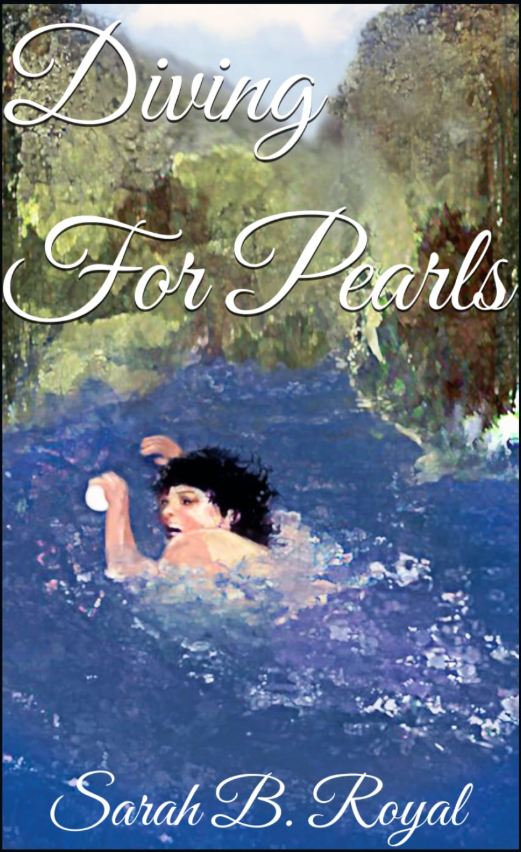
The Poem Below is a rewrite of In Mrs. Manstey’s View from the book Diving For Pearls by Sarah B. Royal
In Mrs. Manstey’s View (rewrite in iambic pentameter)
In Mrs. Manstey’s view from a window high,
Where portraits whisper secrets to the soul,
A water cup, silver’s swirl, reflects sky.
Rembrandt’s mastery. Fleeting is control.Through thoughts like quicksand, a dilettante’s quest,
within her mind, the pot-boiler’s fire—bright.
She’d hoped to find his father’s son confessed,
full-circle moments, traced in hues of night.Take back the kingdom! Turn wheels of Atreus’ lore,
where relentless pot-boilers poisons flow,
The old master’s wisdom like ravens soar,
Fever burns in hearts she may never know.His father’s son’s legacy—painted halls,
Destiny molds the past—while futures blend,
Moments amass as Mrs. Manstey recalls,
peering through the glass, good may yet transcend.
Title Constraint Poetry: Creativity Through Restriction
Title Constraint Poetry is a unique and highly inventive form of writing that transforms limitation into inspiration. In this approach, poets construct a new work by drawing on the titles of existing poems, typically from a single poet or a carefully organized list—alphabetical, thematic, or otherwise. The challenge lies in incorporating as many words as possible from the selected titles into a cohesive new poem. By doing so, the poet honors the original works while generating fresh meaning, often uncovering unexpected connections and resonances. It is recommended that about twenty titles per grouping be used to maximize creative potential, providing enough material to inspire narrative, thematic, and stylistic innovation.
What makes Title Constraint Poetry so compelling is the balance it strikes between structure and creativity. The poet is simultaneously limited and liberated: restricted by the words and titles chosen, yet empowered to shape them into entirely new configurations. This method encourages close attention to language, rhythm, and semantic interplay, forcing the poet to find inventive ways to weave disparate elements together. It is a practice in synthesis, where constraint becomes the engine of discovery rather than a barrier to expression.
The poem In Mrs. Manstey’s View, rewritten in iambic pentameter, demonstrates the artistry of Title Constraint Poetry and how the artist is allowed the freedom to form the outcome through form. This type of poetry is more formally known as Fusion Poetry.
In Mrs. Manstey’s view from a window high,
Where portraits whisper secrets to the soul,
A water cup, silver’s swirl, reflects sky.
Rembrandt’s mastery. Fleeting is control.
The opening quatrain establishes setting, tone, and atmosphere while skillfully integrating titles or title fragments into coherent lines. Words like “view,” “whisper,” “soul,” “reflects,” and “control” are drawn from preexisting poem titles found in a large poetry anthology that was organized by theme. Fusion poetry is ment to flow naturally, creating a vivid, contemplative scene. By placing these fragments into iambic pentameter, the poet reinforces musicality and traditional poetic form, demonstrating that constraint and elegance can coexist.
As the poem continues:
Through thoughts like quicksand, a dilettante’s quest,
within her mind, the pot-boiler’s fire—bright.
She’d hoped to find his father’s son confessed,
full-circle moments, traced in hues of night.
Here, the titles are not simply listed—they are reinterpreted and expanded, woven into narrative and imagery. The “dilettante’s quest” and “pot-boiler’s fire” become metaphors for Mrs. Manstey’s inner life, while phrases like “father’s son confessed” and “full-circle moments” evoke story, emotion, and reflection. This is the transformative power of Title Constraint Poetry: fragments of other works are recast with new meaning, creating a layered dialogue between past and present, source and creation. Using poems from past centuries also creates uniue challenges through archaic language and words with outdated meaning are given new life.
The final stanza of the poem underscores the versatility of the form:
Take back the kingdom! Turn wheels of Atreus’ lore,
where relentless pot-boilers poisons flow,
The old master’s wisdom like ravens soar,
Fever burns in hearts she may never know.
His father’s son’s legacy—painted halls,
Destiny molds the past—while futures blend,
Moments amass as Mrs. Manstey recalls,
peering through the glass, good may yet transcend.
The poem demonstrates the fusion of narrative, metaphor, and intertextual resonance. The poet employs the titles to evoke myth, memory, and personal reflection, while adhering to a coherent rhythm and meter. Phrases such as “wheels of Atreus’ lore” and “painted halls” show how constraint can produce imaginative leaps—unexpected connections that surprise and engage the reader. This surpise often comes from unexpected twists that come about due to the constraint . The poem does not feel forced; rather, the constraints have stimulated inventive expression, allowing the poet to explore themes of legacy, perception, and the passage of time.
Title Constraint Poetry exemplifies a broader principle in poetry: limitations often generate innovation. By deliberately working within prescribed boundaries, poets are compelled to explore language, imagery, and form with heightened attention and creativity. What might seem like restriction becomes a catalyst for discovery, producing work that is layered, intellectually engaging, and aesthetically compelling.
Ultimately, Title Constraint Poetry is more than an experimental exercise—it is a testament to the power of structure to inspire originality. It bridges the past and present, weaving together fragments of poetic history into something new and resonant. In In Mrs. Manstey’s View, we see how titles can be transformed into narrative, emotion, and imagery, proving that constraint is not limitation, but opportunity: a framework within which creativity flourishes.

 WoPoLi
Leave a comment