
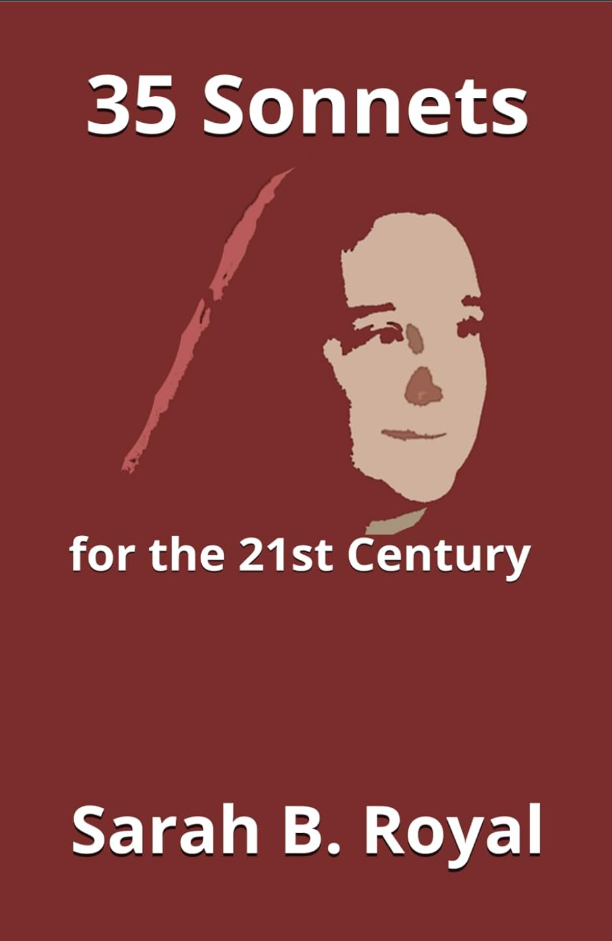
Sarah B. Royal’s collection, 35 Sonnets for the 21st Century, revitalizes the sonnet form, blending tradition with innovation while exploring themes of identity and human experience. Inspired by Fernando Pessoa’s work, Royal honors and reinterprets the sonnet through a diverse range of forms and stylistic choices. Her collection serves as both a tribute to the past and a forward-looking exploration of contemporary poetry.
The collection showcases various sonnet forms, including Curtal, Kyrielle, and Terza Rima, reflecting Royal’s technical mastery and commitment to poetic tradition. By balancing strict formal constraints with free-flowing expression, Royal exemplifies the modern poet’s pursuit of innovation within established boundaries. Her work invites readers to consider the enduring relevance of the sonnet form and the dynamic interplay between structure and freedom in poetry.
Royal also offers insights into traditional sonnet structures, such as the Shakespearean, Petrarchan, and Spenserian forms. Each of these consists of 14 lines with distinct rhyme schemes and thematic progressions. In contrast, her Modern Sonnets break from convention, allowing for flexible syllable counts and unconventional rhyme patterns. Additionally, the Curtal Sonnet, invented by Gerard Manley Hopkins, features a compressed 11-line structure with a unique rhyme scheme. Royal’s exploration of the Sonnet Sequence, where interconnected poems build upon a single theme, further underscores her innovative approach. The Irregular Sonnet, another form she employs, embraces flexibility in rhyme and meter while retaining the traditional 14-line structure and pivotal thematic shift, known as the volta.
A standout example from the collection is Enid’s Diary, a poem that delves into themes of legacy, loss, and the often-overlooked contributions of women throughout history. Enid’s diary symbolizes the potential for truth and understanding beyond the male perspective, emphasizing the importance of “herstory.” The poem reflects on mortality and the enduring power of love and memory while exploring the resilience of women like Boadicea and Fatima. Boadicea’s legacy represents resistance against oppression, critiquing the fleeting nature of empires. Similarly, Fatima’s narrative highlights the emotional and physical toll borne by women, contrasting with the glorified portrayals of male heroes.
Throughout Enid’s Diary, Royal critiques the historical marginalization of women, underscoring their sacrifices and the injustices they endured. The imagery of spring and renewal serves as a metaphor for hope amidst despair, particularly for mothers and daughters. By questioning the validity of male-dominated legends, Royal asserts the importance of recognizing women’s voices and their contributions to society. The poem ultimately calls for reflection and a more inclusive historical narrative, encouraging a deeper understanding of freedom and unity.
Moreover, 35 Sonnets for the 21st Century engages with themes of identity, existence, and the philosophical depth of poetry. Royal’s dialogue with Fernando Pessoa’s sonnets, originally published in 1918, highlights the continuity and evolution of poetic inquiry. Pessoa’s sonnets transcend conventional themes of love and nature, instead grappling with existential questions and the fragmented nature of human experience. His work is characterized by a balance of rigid structure and philosophical fluidity, prompting readers to contemplate identity, truth, and the passage of time.
Royal’s collection serves as an invitation to explore the complexities of human existence through the lens of poetry. Her reflections on love, loss, hope, and resilience encourage introspection and emotional connection. Through the philosophy of WoPoLi P.S., she seeks to uplift and inspire, promoting literary awareness and challenging preconceived beliefs. By pushing the boundaries of traditional forms, Royal exemplifies the transformative power of poetry, urging readers to engage with language and ideas in thought-provoking ways. 35 Sonnets for the 21st Century is a testament to the enduring significance of the sonnet, celebrating its adaptability and timeless relevance in the modern era.

 WoPoLi
Leave a comment