
Not Poetry for Children, but Poetry by a Child
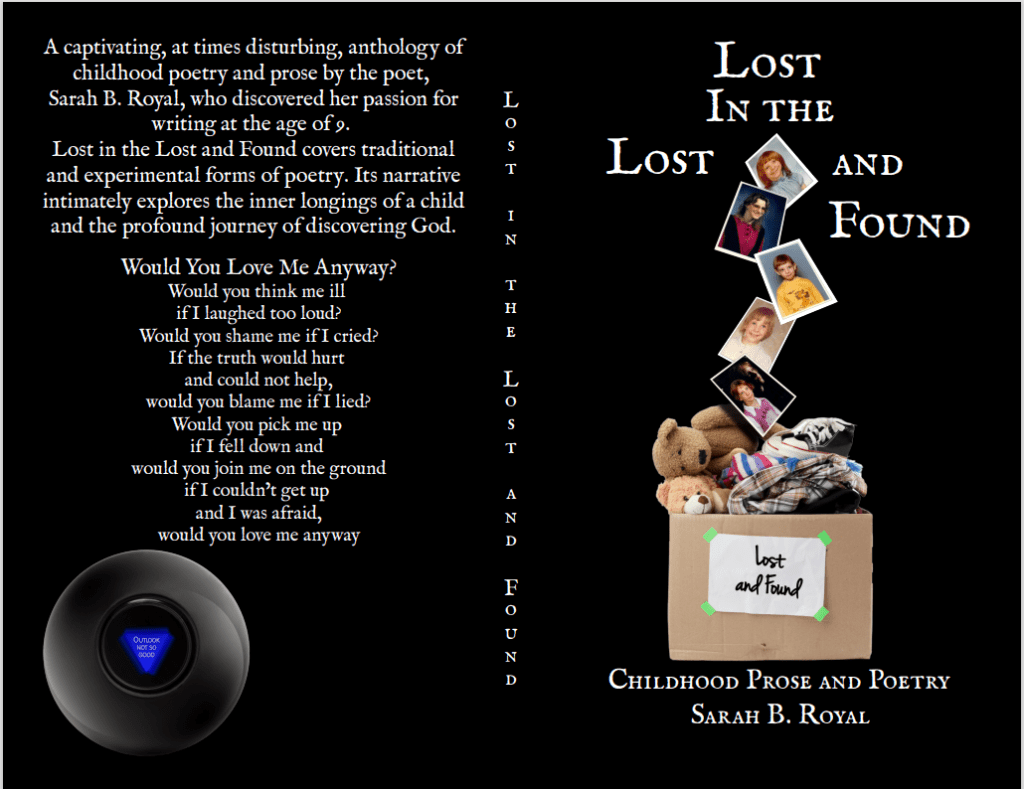
Lost in the Lost and Found is best understood as juvenilia: writing made in childhood and adolescence, preserved not because it is polished in the adult sense, but because it records the earliest architecture of a writer’s mind. This distinction matters. The book is not a collection of poems written for children. It is a collection of poems written by a child, growing into a young adult. The work is more intimate, more vulnerable, and in many places more unsettling.
The poems begin with the recognizable brightness of childhood writing: love, animals, friendship, seasons, family, tongue-twisters, storybook imagination, and school-assignment forms. There is humor in the turkey’s point of view in “Thanksgiving,” playfulness in “Fiddle-head Tongue Twister,” and early metaphysical questioning in “Who am I.” Even in these early pieces, the young writer is not merely practicing rhyme. She is testing language as a way to understand what the world is, what love is, what friendship promises, and why sorrow enters even ordinary things.
As the collection progresses, the reader watches innocence and awareness co-exist. The speaker who can imagine the grass giggling in “The Secret Place” is also the speaker who can write of abandonment, betrayal, religious confusion, war, loneliness, and children who are not believed. This is one of the strongest reasons to frame the book as juvenilia. The value of the work is not that every poem behaves like a mature, revised literary artifact. The poems preserve the developing consciousness of a young writer trying to survive, interpret, and bear witness.
Juvenilia often reveals what later work may refine: obsession, instinct, rhythm, recurring symbols, moral pressure, and emotional pattern. In this book, the recurring images are already clear. There are birds, cages, fields, water, storms, flowers, mirrors, silence, tears, rooms, graves, children, angels, mothers, and God. These images reflect the same questions from different emotional distances. What is love if it hurts? What is truth if no one believes the child? What is faith when the world is cruel? What can writing preserve when memory, family, and safety fail?
To read Lost in the Lost and Found as juvenilia is to read it with tenderness and seriousness. Tenderness allows the reader to see the child at work: experimenting, imitating, rhyming, playing, grieving, and reaching. Seriousness allows the reader to recognize that a child’s writing can contain real theology, real social criticism, real witness, and real art. These poems are not lesser because they are early. They are early evidence of a lifelong vocation.


Leave a Reply