
Writing in the Margins of My Life
As I approached my thirties, I was exhausted. At one point, I worked three jobs and as many as eighty hours a week. I chose health and human services because I wanted to help people, especially people whose needs others misunderstood, dismissed, or reduced to paperwork. Care should recognize the humanity of the person. It should not stop at a diagnosis, a completed task, a charted note, or an institutional requirement.
I worked on an Alzheimer’s ward as both a nursing assistant and a weekend activities director. I created care plans that staff often ignored. I conducted training sessions that many resented. I watched a facility speak the language of care while money, staffing, convenience, and resistance to change shaped what residents actually received. I wanted to improve care, but I worked inside a system that fought the very changes the residents needed.
Even there, poetry forced its way into my life. Between nursing rounds and activity programs, I wrote songs on scraps of paper. Many carried the ache of missing my husband and children during the long hours I spent away from them. Others were songs to God, written from weariness, loneliness, faith, and the need to know that the work had meaning even when the system around me made meaning difficult to hold. Writing became the place where I stored emotions I had no time to examine while I was surviving them.
I also created poetic stories for my children. Many came at night while I put them to bed. Some vanished because I was too tired to write them down afterward. I have God and my husband to thank that more of my poetry and music did not disappear. I wrote on receipts, napkins, paper bags, envelopes, and almost any scrap I could find. I was not good at protecting those scraps. My husband was. He never threw anything away without inspecting it first. When he found a scribbled note, an unfinished verse, a fragment of melody, or a line that looked like nothing to anyone else, he saved it.
Nearly a decade passed before I began transcribing many of those scraps onto a computer. By then, some had become hard to decipher. Others held fragments whose melodies had faded from memory. Still, the words survived because someone in my home understood that a crumpled receipt might contain part of a song. My husband became one of the first caretakers of my literary work.
Eventually, I could no longer meet the physical demands of caring for so many residents under those conditions. I judged myself harshly because I could not give each person the care they deserved. At the time, I did not understand that the work itself had become unreasonable. I was not failing because I lacked compassion. I was breaking because compassion cannot make one body do the work of several.
My work as an activities director still gave me some of the greatest rewards I had known. I reminisced with residents, conducted poetry classes, and led Christian services. I watched people remember pieces of the past, find words for feelings, join in familiar hymns, respond to poems, or simply smile. Those moments taught me that creativity was not separate from caregiving. Poetry, music, memory, storytelling, and faith could reach people when ordinary conversation could not.
The facility made those human connections harder and harder to protect. While I tried to conduct programs, I was often pressured to abandon them and return to nursing rounds. I was often responsible for at least eighteen residents living with Alzheimer’s disease, many confined to bed, while as many as sixty-four residents remained on the floor with only two nurses available. Under those conditions, neglect did not require cruel workers. The conditions themselves produced it. Even workers who wanted to do better could not give every person what they needed.
I contacted the state because someone needed to intervene. Nothing changed. I could not keep working inside a system that violated what I knew care should be. My own limitations mattered, but the expectations placed on us were also impossible. I began to see that remaining there made me part of the neglect I wanted to fight. That realization crushed me. I left. The nursing home closed permanently not long afterward. Many of the poems and songs I wrote during that period reflected my internal conflict, and many remain unpublished.
After leaving the nursing home, I continued working in health and human services. I worked with troubled teenage girls in a residential group-home setting. This was also a position that I felt rewarded by. This position was compromised by personal issues and stress caused by another employee whom had conflicts with my husband and the work he was doing with undercover authorities. I was emotionally played and my job was sabotaged.
That empathy helped me understand people others dismissed, but it also cost me. I carried their pain home. I carried pain I had no power to repair. During periods of especially long work hours, I came home only to sleep, and sometimes even sleep did not restore me. My writing became sparse, not because the desire to create had vanished, but because work had taken almost everything I had.
Long hours were only one part of the strain. I was autistic, though I did not know it yet. I could not understand why responsibilities that other people seemed to manage could overwhelm me so completely. I told myself to work harder, become more organized, tolerate more stress, stop failing, stop being weak, stop needing what I needed. Without an explanation for the way my mind processed the world, I turned many of my struggles into accusations against myself.
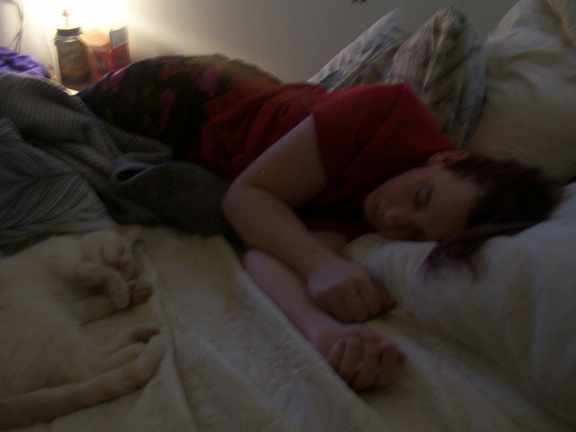
My absence damaged parts of my family life. At the same time, I homeschooled my children while we lived in what often felt like a permanent construction zone. Our house was more than a century old and required an almost complete rebuilding inside and out. I was terrible at cooking, cleaning, and organization. I felt nearly useless when trying to help my husband with the physical work of rebuilding the house. I was working, caregiving, educating my children, trying to preserve my marriage, living inside construction, and measuring myself against standards I could not meet.
Our life took on one danger that sounded too dramatic to be real. When I met my husband, he had worked with drug enforcement. He had served as a submariner in the Navy but gave up a career to return home and care for his dying father. He later remained home to help care for his elderly mother. Duty shaped him. He had an almost heroic need to protect people and confront what he saw as wrong. His military training had him focused on the undeniable criminal activities in our little village. That idealistic sense of justice is one reason I fell in love with him. Though idealistic, unlike him, I was a coward.
For my sake, he stopped working with drug enforcement because he did not want me to live in fear of the consequences. When he began working with them again, fear brought out the worst in me. I resented it. I wanted him to turn away from work he thought was right so I would not have to worry. I hated that in myself, but fear does not become noble simply because we explain it.
There were consequences. I worried that people followed us. People tried to run us off the road. One person attempted to drive into our house. Rocks were thrown at our children. Death threats were shouted at us. Problems followed me into my workplace, where I saw acts of sabotage directed against me. Eventually, I quit my job, and we moved out of our home. I was unemployed, frightened, carrying debt, and responsible for an unfinished house.
I then took on several positions in home settings for children from preschool age through adolescence who were experiencing mental-health challenges. I worked a second job in adult group homes serving people with special needs. My empathy helped me connect with people who were hurting. I could often sense pain beneath anger, silence, unusual behavior, resistance, or withdrawal. I was able to connect with them in ways others could not.
I did not respond with grace concerning my overworked self. I fell into self-pity and obsessive anger. I replayed events until they became a cage. I thought about what had happened, what might happen, who had caused it, who had failed us, and how unfair it all was. My poetry reflected that state of mind. It became darker, angrier, and more repetitive because I was trying to force sense out of experiences that felt unsafe, unjust, and uncontrollable.
At twenty-nine, I broke beneath the weight of it. Exhaustion, constant responsibility, relationship strain, undiagnosed autism, financial fear, overwork, an unfinished home, threats, guilt, and years of telling myself to try harder became more than I could carry.
It took nearly three years for my family to recover from that break. During that time, my writing slowed, but the desire to create did not die. Poetry stayed beneath the exhaustion, waiting for enough breath to return. During this time, I bought a farm. Some of my recovery came through poems about farm life. We moved away from the island for a while and tried to raise animals on this farm. My children attended a small local school, and I did not work during that period. For the first time in years, I rested. As life quieted, gentler poems returned, along with humorous pieces inspired by animals, family life, and our many mistakes as inexperienced farmers.
The farm gave us distance from the life that had nearly swallowed us, but we eventually had to admit that we were not good at raising animals and that the work was becoming another burden. When we sold the farm, we returned to the island. By then, most of the construction on our home had finally been completed, and we came back to a life more stable than the one we had left.
At thirty-three, the birth of my third child became another turning point. I found in her a joy that helped heal wounds from earlier years. I entered the pregnancy fearing I might not survive delivery. The danger was real, and the preparations proved necessary when lifesaving procedures were required. I survived.
Her arrival did not erase what our family had endured. It did not make fear pretend it had never existed. But she awakened something in me that exhaustion, anger, and despair had buried. With her came a second season of lullabies, bedtime stories, playful songs, and poems centered on childhood. The child I feared I might never live to raise became the blessing I needed, and through her I also learned more about who I was and why I was the way I was.
Much of my thirties also went into helping my two older children make the difficult passage from adolescence into adulthood. After years of education in small schools, private school, and at home, we allowed them to choose public school. Both had been highly academic. Instead of flourishing, they felt shamed and diminished within that environment. Each struggled in a different way.
One became pregnant while maintaining perfect grades and blamed us for the pressure and stress she carried. The younger became suicidal and eventually left school altogether, despite having maintained straight A’s until the point when he simply gave up. Public school almost destroyed them both. I watched two intelligent young people suffer, and I could not understand why my own determination, love, and effort could not protect them.
Because my own autism remained unrecognized, I had no framework for understanding that my children might also have neurological and emotional differences. Looking back, I can see that attention-deficit disorder, attention-deficit/hyperactivity disorder, anxiety, autism, or other differences may have shaped what they were living through. We did not understand those possibilities then. I saw bright children struggling and thought encouragement, structure, effort, or better choices should solve problems whose causes we had never been taught to recognize.
My youngest child attended a private school where I also worked. Her differences were impossible to ignore, yet she too remained undiagnosed for years. Her behaviors forced me to become persistent. I demanded answers because I knew something mattered that others were missing. She was finally diagnosed with autism at the age of ten. I immersed myself in learning about autism because I wanted to understand and help her.
During that process, I recognized myself. Experiences I had treated as failures began to arrange themselves differently. The exhaustion, social confusion, sensory strain, intense interests, difficulty balancing responsibilities, problems with organization, emotional overload, and lifelong feeling that I had to work harder than others to accomplish ordinary things finally had a shape. I had moved through much of my life without knowing how differently my mind processed the world.
My thirties became a quieter period of poetic development. Much of my writing centered on recovery, the continuing pain surrounding my two older children’s struggles, and the almost complete absence of meaningful community support for my youngest. I feared she would be misunderstood, misdiagnosed, and unnecessarily medicated. We withdrew from much of society, and I began working primarily from home. That withdrawal limited our lives, but it also protected her while I learned what she needed.
For approximately five years, I also taught at the private school. I was not paid a conventional salary; much of my compensation came through tuition for my son and youngest daughter. During the day, I taught art, computers, and music while also maintaining a full-time customer-service position from home. The workload was heavy, but creativity ran through it.
Teaching art let me encourage visual imagination. Teaching music returned me to the relationship between words, rhythm, sound, and song. Computers opened another structure of creativity and thought. I helped children explore art, music, puppetry, performance, technology, and expression. Creativity was no longer only something I used to preserve my own life. It became something I could help others find in themselves.
My professional work eventually expanded beyond customer service. I moved into technical support, operations management, and recruiting. These jobs did not look literary, but they strengthened skills I later needed: communication, organization, troubleshooting, leadership, pattern recognition, and the ability to manage complicated systems. Those skills helped shape the way I would later organize large writing projects.
During these years, I began experimenting with what I came to call reflective poetry. I returned to poems I had written when I was younger and rewrote them with the understanding I had gained. Sometimes I answered an old poem with a new one. Sometimes I approached the same subject from the perspective of the person I had become. My growing understanding of autism allowed me to reconsider experiences I had once described only through pain, confusion, anger, or self-blame.
The older poems preserved what I felt at the time. The newer poems offered interpretation. I did not want to erase the original voice or pretend later understanding canceled earlier pain. The poems became conversations across time. The younger writer recorded the experience. The older writer returned with knowledge the younger self did not have.
Throughout my thirties and into my forties, I continued working slowly and steadily on my larger poetic projects. Celestial Conversations remained one of the central works of my life, while its continuation, Stellar Musings, grew from ideas that could not be contained within the original project. These were not works created in a single burst. They developed across decades and absorbed spiritual reflection, lived experience, revision, and the changing questions of each stage of my life.
I also continued developing The Poet and the Mathematician. The work drew on many constrained poems I had written during my twenties and placed them within a larger poetic story. Rather than leaving the experiments separate, I began connecting them through character, conflict, structure, and plot. Mathematical and literary constraints became more than exercises in form. They became part of the story’s engine.
The techniques I once explored individually gradually became pieces of a larger design. Palindromes, patterns, formal restrictions, wordplay, and other constraints could influence not only how a poem looked but how a narrative moved. Form was no longer merely a container for meaning. It could generate meaning.
During my forties, much of my poetry involved revisiting old themes or responding to earlier work. I was no longer only recording experience as it happened. I was examining the record I had already created and asking what I understood differently. Revision became a form of reflection, and reflection became a new phase of writing.
During those same years, I began organizing my spiritual poems into First Fruits. Much of the collection drew from songs and poetry written during my twenties and thirties. Those writings carried prayers, praises, doubts, questions, fears, grief, gratitude, and moments of faith through work, motherhood, exhaustion, recovery, and change. Gathering them together showed me that they had been documenting a spiritual journey even when I had written them separately, without knowing they would one day belong to the same collection.
At forty-seven, my writing moved in another direction. I began creating poorly shaped dialogues and overly long poems that became increasingly political. The media environment seemed driven by trauma, conflict, outrage, and impending catastrophe. Public life felt hostile. I absorbed too much of that atmosphere and poured it into my writing.
Many of those pieces became repetitive word dumps rather than carefully shaped poems. They circled the same fears, arguments, frustrations, and warnings without finding form. I have not yet made a serious effort to preserve or organize them because much of the writing remains too long, redundant, and unfinished. Even so, those pieces document where my mind was. They show a period when political anxiety and the constant expectation of disaster overwhelmed the quieter, more reflective parts of my creativity.
As I approached forty-nine, the thought of impending doom produced an unexpected clarity. I was nearing half a century old and had not fulfilled the purpose I had carried since childhood. I had spent decades writing, preserving, revising, working, caregiving, raising children, surviving crises, and developing large projects, but much of the work remained unfinished or unread.
In 2016, I created a website for WoPoLi and committed myself to writing every day. I wanted to explore poetic forms, organize what I had created, develop new work, and finally give sustained attention to the purpose I had carried for most of my life. For approximately three years, I kept that commitment. Writing became a daily practice instead of something forced into the margins between other responsibilities.
Then, shortly before I turned fifty, sudden and severe illness ended my employment and eventually interfered with my writing as well. Life forced another transition before I was ready. I had finally committed myself to writing every day, and then my body reminded me that desire and discipline cannot always overrule illness.
Looking back, I refuse to say I stopped being a poet during the years when I wrote less. I wrote in the margins of a life crowded with work, caregiving, family, fear, education, advocacy, illness, and responsibility. I wrote songs on scraps of paper between nursing rounds. I carried melodies in memory until I could record them. I created stories while putting my children to bed. I taught poetry to people living with Alzheimer’s disease. I used art and music to reach children. I returned again and again to long projects that grew alongside my life.
My creative progress slowed because life demanded nearly everything I had. The desire to write remained. During my forties, the desire to revise became equally important. Some poems arrived through inspiration, some through pain, some through faith, and others through the deliberate challenge of complicated forms and constraints. Later poems returned to earlier experiences with new knowledge and asked what those experiences meant from another stage of life.
Writing was never merely something I did when I had spare time. It was how I endured, understood, remembered, questioned, prayed, imagined, and preserved the life I was living. Even the periods when my writing became sparse, angry, repetitive, unfinished, or difficult to read belong to that history because they reveal how creativity adapted to the person I was and the circumstances I faced.
I am now fifty-three. I want this stage of my life to become a season of revision: recovering unfinished work, organizing what survived, reconsidering what I once wrote, and giving completed form to projects that have followed me for decades. I do not know what the future will bring. Experience has taught me not to trust life to follow the plans I make for it.
What I know is that the writing remains. Some of it survives in finished poems. Some survives in books that grew across decades. Some survives in computer files. Some survives in faded words written on scraps my husband saved when anyone else might have thrown them away. Much of my life was spent writing in the margins, but those margins became the record of the life itself. Now I intend to gather the pieces, revise what can be strengthened, complete what still asks to be finished, and meet the next chapter of writing without apologizing for the force of what I know.


Leave a Reply