
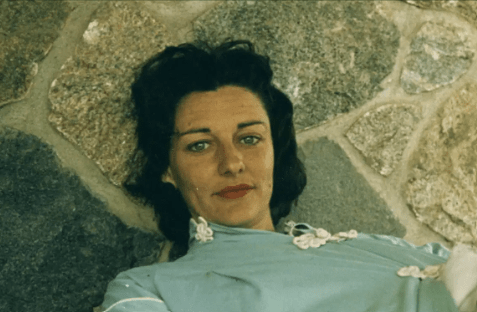
Anne Sexton and Sarah B. Royal are poets of suffering, womanhood, spiritual pressure, family, identity, death, and artistic transformation. Sexton is considered here primarily as a major American confessional poet whose work made private psychological extremity, taboo experience, domestic conflict, sexuality, and suicidal crisis available as subjects for serious poetry. Royal is considered as a long-working poet whose body of work moves across personal lyric, spiritual poetry, myth, folklore, narrative, invented and inherited forms, songs, sonnets, poetic craft projects, and experimental structures. The comparison is not an argument that Royal is a direct descendant or imitation of Sexton. It is an effort to distinguish their shared concerns from their different poetic methods of confession, form, faith, and the work of turning pain into poetry.
Anne Sexton and Sarah B. Royal share several important qualities as poets. Both write about suffering and death, womanhood, family, faith, and identity, difficult relationships, and the effort to create meaning from painful experience. Both also use religious imagery without turning faith into easy reassurance. In their poetry, belief may be desired, doubted, resisted, challenged, or experienced as both comfort and burden. Both poets understand that spiritual language can intensify pain as well as console it. Yet these similarities should not obscure the fact that they are substantially different writers. Sexton is more psychologically concentrated, confessional, theatrical, and immediately recognizable in voice. Royal is broader in subject, more formally varied, more spiritual and mythic in range, and more interested in poetry as a whole field of invention.
Sexton’s principal mode is confessional and dramatic. She writes as if she has taken experiences normally hidden from polite public speech and placed them beneath a theatrical spotlight. Psychiatric hospitalization, suicidal desire, adultery, and resentment, sexuality, shame, bodily fear, spiritual hunger, and the frustrations of domestic life become central poetic materials. Her language can sound conversational and spontaneous, but it is carefully made. She uses repetition, flexible rhythm, rhyme, black humor, abrupt tonal shifts, and startling comparisons to transform private suffering into dramatic poetry. Her characteristic movement is from a private wound, through an unexpected image, toward a psychological revelation. Even when she uses mythology or fairy tale, she often uses it to expose sexual, familial, and psychological violence beneath familiar stories.
Royal’s poetry may also arise from personal experience, but it is not primarily confessional in Sexton’s sense. Royal more often transforms experience into formal poetry, spiritual inquiry, symbolic narrative, folklore, myth, song, philosophical reflection, or craft experiment. Her work includes sonnets and other established forms, mathematical and linguistic constraints, narrative poems, devotional poems, songs, adaptations, and self-created poetic forms. Recurring images give her poetry a recognizable symbolic world. Rather than remaining primarily inside the exposed self, she frequently moves outward toward religion, history, nature, cultural memory, social questions, mythology, and the structure of poetry itself. Her characteristic movement is from experience or question, through symbol, story, or form, toward a search for meaning.
This difference makes Royal more versatile in form while Sexton remains more concentrated in voice. Sexton’s work is recognizable because her emotional and psychological territory is intensely focused. Her poems often seem to speak from a mind under extreme pressure, and that pressure creates a voice that can be identified within a few lines. Royal’s identity as a poet is spread across a larger range of subjects, methods, and projects. Her voice is reflective, searching, earnest, sometimes visionary, and often spiritually alert, but it changes according to the demands of form or subject. Sexton repeatedly returns to the damaged or divided self. Royal repeatedly tests how many structures, traditions, symbolic languages, and emotional registers poetry can contain.
In terms of quantity, Sexton produced a substantial body of recognized work during a relatively short career. Nine poetry collections appeared during her lifetime, with additional collections published after her death. Her published work is well documented, widely studied, and firmly established within twentieth-century American literature. She also left behind individual poems that continue to circulate in anthologies, classrooms, and criticism. Her reputation rests not only on the number of poems she wrote but on the intensity with which her strongest poems altered what readers believed a woman poet could say publicly.
Royal has written over a much longer span and has attempted a wider variety of forms and project types. Her body of work includes 35 Sonnets for the 21st Century, Kulóskap the Master, and Other Algonkin Poems, Puck in Pasture, and a broad range of spiritual, personal, political, narrative, mythological, and formally experimental poetry. She has also worked extensively with traditional and invented forms through the large WoPoLi poetry project. A precise poem-for-poem total cannot be established from the material currently available, but Royal may well equal or exceed Sexton in raw lifetime production. She certainly exceeds Sexton in the number of poetic forms attempted. Sexton, however, remains far ahead in documented critical reputation, institutional recognition, and the number of poems that have become widely known.
The distinction, then, is not simply that one poet wrote more than the other. Royal may have the larger raw body of creative work and clearly demonstrates greater formal range. Sexton has the more established published canon and the more concentrated set of famous individual poems. Royal’s accomplishment lies partly in sustained production across decades and in her willingness to engage poetry through many forms, traditions, and experiments. Sexton’s accomplishment lies in creating a smaller but more concentrated body of work that permanently altered the subjects considered acceptable for serious American poetry.
Questions of quality require an even more careful distinction between literary reputation and the poems themselves. Sexton’s finest poems are exceptionally memorable because they combine emotional danger with an unmistakable voice. She could turn psychological suffering into strange, physical, and often disturbing images while maintaining enough rhythm and dramatic control to make the experience compelling. Her strongest work is compressed, intense, and technically resolved. This combination helped make her one of the defining figures of confessional poetry, and Live or Die received the Pulitzer Prize for Poetry in 1967.
Sexton’s reputation does not mean that every poem she wrote is equally successful. Some of her work can become melodramatic, repetitive, overly theatrical, or self-mythologizing. At times, the performance of emotional extremity threatens to become more important than the poem itself. Her literary standing rests partly on the extraordinary force of her strongest poems rather than on absolute consistency throughout her body of work.
Royal’s strongest qualities are different. She possesses genuine emotional and spiritual seriousness, an unusually large formal vocabulary, and a willingness to undertake ambitious long-term projects. Her recurring symbols create connections across poems and give her work an identifiable imaginative landscape. She is capable of moving between intimate personal experience and broader questions involving myth, religion, nature, history, justice, identity, inheritance, and belonging. Her sustained engagement with poetry over decades also demonstrates artistic persistence that is not dependent on one movement, fashion, or method.
Royal’s work can nevertheless be uneven, as might be expected in a very large body of writing accumulated over many years. Some poems explain their meaning too directly rather than allowing image, rhythm, metaphor, and implication to carry the full emotional weight. In certain longer pieces, the moral, religious, political, or philosophical statement may become more prominent than the poetry. Some poems would benefit from greater compression, sharper selection, or more trust in the reader. These weaknesses do not suggest an absence of substance. On the contrary, Royal’s principal editorial challenge is not finding meaningful material but deciding which poems most successfully unite that material with formal discipline and memorable language.
The fairest direct assessment is that Sexton’s finest poems are more compressed, immediately distinctive, and technically resolved than Royal’s average poem. Royal’s complete body of work, however, is broader, more formally inventive, and more intellectually varied than Sexton’s. At Royal’s best, especially when emotional honesty, structural control, and recurring imagery work together, her writing rises well above amateur or merely personal verse. The next step in establishing the strength of that body of work would be rigorous selection and editing: separating the most accomplished poems from the much larger surrounding collection, clarifying the strongest sequences, and allowing the best work to stand in sharper relief.
The poets’ themes reveal both kinship and difference. Both write about death, grief, marriage, motherhood, identity, isolation, spiritual uncertainty, and the body as a place of suffering. Both examine the tension between public role and private reality. A wife, mother, believer, or socially acceptable woman may outwardly perform the identity expected of her while inwardly experiencing conflict, anger, fear, doubt, or estrangement. Both poets also treat pain as material from which meaning might be created, though neither suggests that suffering automatically produces wisdom or redemption.
Sexton’s thematic territory is more tightly concentrated around psychological extremity. Mental hospitals, psychiatric treatment, and suicidal ideation, sexuality, shame, and bodily taboo, domestic confinement, and the divided self are central to her poetry. She helped establish experiences that had often been dismissed as shameful, private, or inappropriate as legitimate subjects for serious literature. Her use of fairy tales in Transformations follows the same pattern. She enters familiar stories to reveal damaged psychology, cruelty, sexism, and family violence concealed beneath their traditional surfaces.
Royal’s thematic field is considerably wider and less exclusively psychological. Her poetry encompasses Maine and the natural environment, Christianity, ancestry in Indigenous legend, folklore, traditions, cultural memory, supernatural transformation, injustice, political concern, language, mathematics, poetic form, and the process of making literature. Sexton often enters mythology to expose the injured psyche. Royal more often enters mythology to investigate spiritual reality, heritage, transformation, memory, and belonging.
The difference between them can also be described as a difference between pressure and expansion. Sexton’s poems often compress experience until the voice becomes nearly explosive. Royal’s poems often expand experience outward into symbol, and form. Sexton is strongest when the poem feels like a chamber in which the self cannot escape its own truth. Royal is strongest when the poem feels like a field of correspondences, where personal feeling meets nature, faith, myth, inherited form, and imaginative world-making.
Ultimately, Anne Sexton is the more accomplished poet at producing concentrated, psychologically explosive individual lyrics. Sarah B. Royal is the more expansive poet in subject, formal variety, and overall project scale. Sexton’s greatness depends on intensity, compression, danger, and the recognizability of her voice. Royal’s potential literary importance depends on breadth, sustained production, formal invention, spiritual and mythic reach, and the creation of a large interconnected body of work.
Royal should not be described simply as a modern version of Sexton. Her poetry is better understood as occupying a meeting point among Sexton’s emotional candor, Edna St. Vincent Millay’s engagement with traditional form, Edwin Morgan’s belief that poetry can continually reinvent itself, and the spiritual, mythological, regional, and narrative traditions that have shaped Royal’s own work. Sexton currently possesses the higher proven peak and the stronger canonical reputation. Royal possesses the broader range, probably the larger raw lifetime output, and a literary identity that could become more clearly distinguished through careful selection, compression, organization, and editing.


Leave a Reply