
Why Early Poems Matter
It is tempting to judge juvenilia by asking whether the early work sounds like the author’s later maturity. That is the wrong first question. The better question is: what does the early work reveal that later polish might hide?
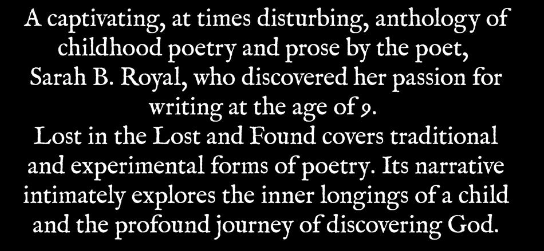
Lost in the Lost and Found matters because it preserves the raw beginnings of a poetic life. It shows the child before she has learned to disguise her questions. It shows the adolescent before she has been taught which subjects are acceptable, which griefs are too much, which forms are fashionable, and which emotions should be softened for the comfort of others. Its directness is part of its importance.
The book also matters because it documents the relationship between writing and survival. The author recalls wanting to destroy painful poems but saving them because of a childhood conviction that she had been told to write and preserve her work. That preservation gives the collection an archival power. These are not simply poems collected for nostalgia. They are rescued documents from the life of a young writer who understood, even then, that words can outlast the moment that produces them.
Readers should not approach the book expecting a single tone. It contains humor, innocence, formal exercise, fantasy, longing, anger, spiritual hunger, social witness, grief, and repair. That range is not a contradiction. It is childhood and adolescence truthfully recorded. A child can laugh at nonsense, write about a turkey, mourn betrayal, question God, fear death, and imagine stars in the same developing life. The collection lets all of those selves remain present.
In that sense, Lost in the Lost and Found is also a book about recovery. The poems recover the child from silence. They recover the young writer from dismissal. They recover the lost pages from private hiding. They recover the continuity between the little girl, the young lady, and the woman who can now look back and say: I believe her. I love her. She was worth saving.
That may be the deepest reason to publish juvenilia. Not because youth is quaint, and not because every early line is perfect, but because early writing can carry the first unguarded evidence of a soul. These poems show the beginning of a voice that kept writing because it had been told to live.


Leave a Reply