Joseph Brodsky was a Russian-born American poet and essayist whose life and work were shaped by persecution, exile, and a profound commitment to literature and individual freedom. Born on May 24, 1940, in Leningrad to a Russian Jewish family, he survived the Siege of Leningrad during World War II, an experience that affected his health throughout his life. His father was a photographer for the Soviet Navy, and his mother worked as an interpreter. The family faced poverty and discrimination under Soviet rule. Brodsky left school at fifteen and worked in a variety of occupations, including jobs in a morgue, a mill, a boiler room, and geological expeditions. Despite his limited formal education, he pursued an extensive program of independent study, learning Polish and English and developing a deep appreciation for European poetry, particularly the works of John Donne and Czesław Miłosz. He began writing poetry in the mid-1950s, and his work soon circulated among underground literary circles in Leningrad. Poems such as “The Jewish Cemetery near Leningrad” and “Pilgrims” helped establish his reputation as a promising young poet. In 1960, he met the celebrated Russian poet Anna Akhmatova, who recognized his talent and became an important mentor.
Brodsky’s independence and refusal to conform to Soviet literary expectations brought him into conflict with the authorities. In 1963, a Leningrad newspaper condemned his poetry as pornographic and anti-Soviet, leading to interrogation, psychiatric confinement, and eventual arrest. In 1964, he was charged with “social parasitism” because the government refused to recognize poetry as legitimate employment. He was sentenced to five years of hard labor in the Arkhangelsk region of northern Russia but served approximately eighteen months before international protests and appeals by prominent intellectuals, including Anna Akhmatova, Dmitri Shostakovich, and Jean-Paul Sartre, helped secure his release in 1965. In 1972, Soviet authorities forced him to leave the country, sending him to Vienna. With assistance from the poet W. H. Auden and American scholars, Brodsky settled in the United States, where he became a naturalized citizen in 1977. He continued writing and teaching literature at several institutions, including the University of Michigan, Queens College, Columbia University, Cambridge University, and Mount Holyoke College, where he held the position of Andrew Mellon Professor of Literature.
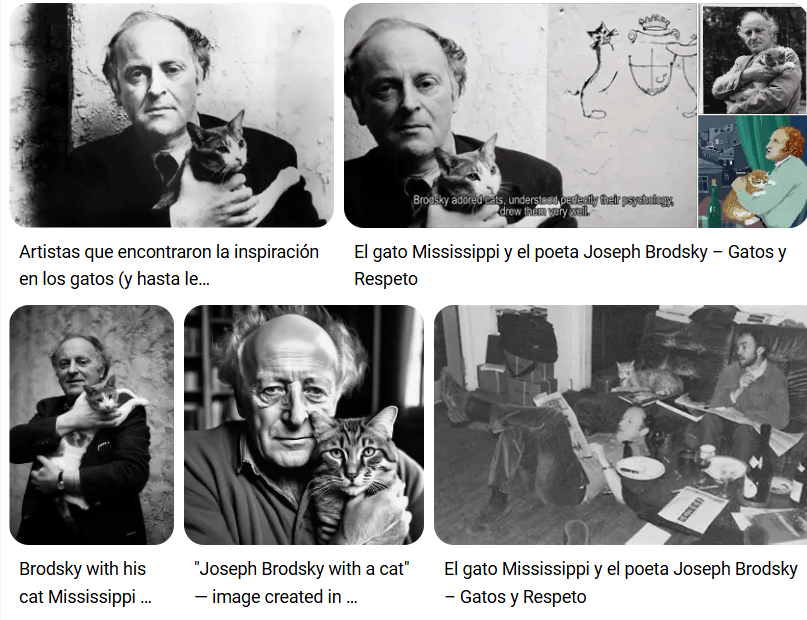
Throughout his career, Brodsky published numerous collections of poetry and essays in Russian and English. His major works include A Part of Speech (1980), Less Than One: Selected Essays (1986), To Urania (1988), Watermark (1992), and So Forth (1996). His writing combined lyrical intensity with philosophical reflection, exploring themes of exile, memory, mortality, time, language, and the human condition. Influenced by poets such as Alexander Pushkin, Boris Pasternak, John Donne, and W. H. Auden, he developed a distinctive literary voice that crossed linguistic and cultural boundaries. Although his work was not primarily political, its emphasis on individual conscience, spiritual independence, and artistic freedom challenged the ideological conformity demanded by Soviet authorities. His literary achievements brought international recognition, including a MacArthur Fellowship in 1981 and the Nobel Prize in Literature in 1987, awarded for his “all-embracing authorship, imbued with clarity of thought and poetic intensity.” He later served as United States Poet Laureate from 1991 to 1992. Brodsky died of a heart attack in New York City on January 28, 1996, at the age of fifty-five. He was buried on the island of San Michele in Venice, a city that held deep personal and literary significance for him. Today, he is remembered as one of the most important poets of his generation, whose mastery of language, intellectual independence, and reflections on exile and human existence continue to influence readers and writers around the world. He also liked cats, so he was obviously an alright guy.


Leave a Reply