Early Forms, School Forms, and Wild Forms
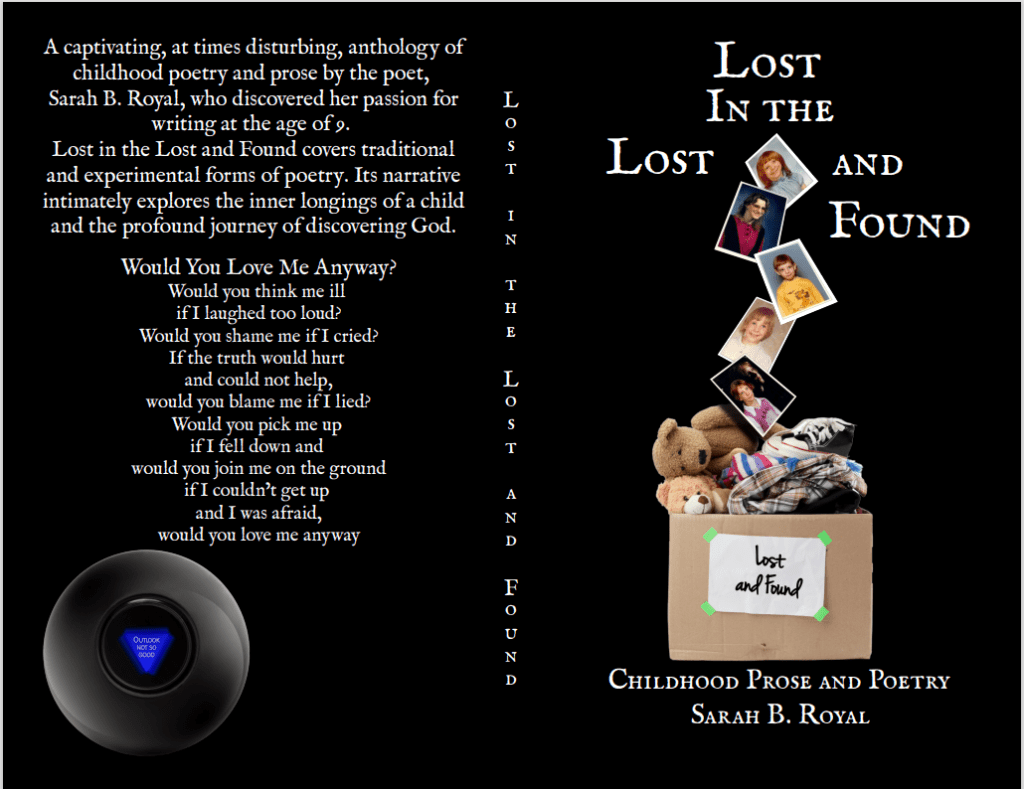
Lost in the Lost and Found shows a young writer learning form from every available source: school assignments, rhyme dictionaries, Bible reading, memory, song, fantasy, nature, and private emotional urgency. The result is a collection that moves between traditional rhyme, prose-poem reflection, prayer, narrative, fantasy, nonsense, acrostic-like play, psalmic address, and experimental questioning.
This variety is one of the reasons the book works as juvenilia. Children and adolescents do not usually write from within a formal literary movement. They write from encounter. They discover a pattern and try it. They hear a rhythm and imitate it. They find a word in a dictionary and follow it. They write a poem for a mother, a sister, a friend, a teacher, God, a lost self, or a future reader. The formal range of the book documents not a lack of direction, but a young mind trying every door language offers.
Some pieces are playful and compact. Others are expansive, dramatic, and emotionally overloaded in the way young writing can be when feeling arrives faster than craft can restrain it. That overload should not be treated as a flaw only. It is also evidence. It shows the pressure under which the poems were made. The young writer is often not decorating an emotion; she is trying to get it out alive.
The book’s early nature poems and animal poems show a child using the natural world to think. Trees, robins, lions, bunnies, unicorns, horses, rain, seasons, and rivers are not just scenery. They are emotional instruments. They allow the young writer to speak indirectly about freedom, danger, gentleness, death, and longing. Later, images of cages, snares, graves, mirrors, rooms, and storms darken that symbolic vocabulary. The forms change because the inner spirit changes.
The spiritual poems add another layer of form. The psalm-like pieces and direct prayers show a young writer moving from lyric complaint toward address: speaking not only about pain, but to God through pain. This movement gives the collection its larger shape. It begins in discovery, passes through loneliness and witness, and reaches toward repair, forgiveness, faith, and the inner child. The forms are not random. They are the trail left by a child learning how to keep speaking.


Leave a Reply